loader image

Al-Subaie Group Law Firm

blog en

Khula vs Divorce in Kuwait
blog en, Personal Status Cases

Khula vs Divorce in Kuwait Legal Explanation

The dissolution of a marriage is a significant legal event governed by specific provisions within the Kuwaiti Personal Status Law. While the termination of a marital contract has become more common, many individuals remain unaware of the critical distinctions between the primary methods of separation: divorce (Talaq) and Khula. Both pathways lead to the end of a marriage, but they differ fundamentally in their initiation, procedures, and financial consequences. Understanding the Khula vs Divorce in Kuwait explained in this article is essential for anyone navigating this complex area of family law. Core Differences Khula vs Divorce in Kuwait To fully grasp the legal landscape, it is crucial to differentiate between a divorce initiated by the husband or by mutual consent and a Khula initiated by the wife. The following table outlines the primary distinctions based on Kuwaiti law. Feature Divorce by Mutual Consent (Talaq al-Ibra) Khula Initiation Can be initiated by the husband or by mutual agreement between both spouses. Initiated exclusively by the wife through a legal petition to the court. Nature It is considered a revocable divorce (raj’i) during the waiting period (iddah). It is an irrevocable divorce (ba’in), meaning the husband cannot revoke it. Financial Consideration The wife may agree to waive some or all of her financial rights in exchange for the divorce, but this is subject to negotiation. The wife must relinquish all her financial rights (mahr, deferred mahr, nafaqat al-iddah) in exchange for the dissolution of the marriage. Procedure Can be processed before a religious notary (Ma’dhoun) or through the court. Processed exclusively through a court petition and subsequent judgment. Spousal Rights The husband has the right to reconcile with his wife during the waiting period. The wife may retain her right to spousal maintenance unless waived. The husband has no right to reconciliation. The wife forfeits all rights to spousal maintenance and other financial compensations. Financial Rights of the Wife in a Divorce by Mutual Consent In a divorce by mutual consent (Talaq al-Ibra), the Kuwaiti Personal Status Law preserves several key financial rights for the wife, unless she explicitly waives them as part of the agreement. These rights include: •Child Custody: The right to custody of her children, provided she meets the legal conditions for a custodian. •Child Maintenance: The right to receive financial support for the children, covering expenses such as food, clothing, education, and other necessities. •Custody Housing: The provision of adequate housing for the children during the custody period, or a monetary allowance in lieu of housing. •Nursing Fees: If she has an infant, she is entitled to receive compensation for nursing the child. •Deferred Mahr & Maintenance: The right to her deferred dowry (mu’akhar), waiting period maintenance (nafaqat al-iddah), and a consolatory gift (mut’ah), unless she absolves her husband of these obligations in the divorce agreement. Financial Rights of the Wife After Khula While a wife initiating Khula forfeits her personal financial rights against the husband, she retains all rights associated with her children. The law ensures that the children’s welfare is not compromised by the dissolution of the marriage. Her primary rights post-Khula are: •Child Custody: The absolute right to child custody, assuming there are no legal impediments. •Child Maintenance: The father remains fully responsible for the financial maintenance of the children, including housing, food, clothing, and education. •Custody Housing: She is entitled to a residence for the duration of her custody of the children or a housing allowance. Distinguishing Khula vs. Divorce in Kuwait for Harm (Talaq lil-Darar) It is common to confuse Khula with another type of wife-initiated separation: divorce for harm. Although both are sought by the wife to end the marriage, their legal foundations and outcomes are vastly different. Legal Basis •Divorce for Harm: This requires the wife to prove that the husband has inflicted direct harm upon her, such as physical abuse, neglect, or abandonment. Substantial evidence is necessary to support the claim. •Khula: This is a no-fault option for the wife. She does not need to prove harm; her statement that she can no longer continue the marital relationship is sufficient, provided she agrees to the financial renunciation. Legal Procedures •Divorce for Harm: The legal process is often lengthy, involving court sessions, witness testimonies, and extensive evidence review. •Khula: The procedure is generally faster. The wife files a direct petition, and the case focuses on the terms of the separation rather than proving fault. Financial Outcomes •Divorce for Harm: If the court finds that harm is proven, the wife is granted a divorce and retains all her financial rights, including the deferred dowry and maintenance. •Khula: The wife must waive all her personal financial rights to secure the divorce. See also : Divorce Lawyer in Kuwait The Essential Role of a Lawyer in Khula Proceedings Navigating the complexities of Khula requires professional legal expertise. An experienced family law attorney plays a critical role in: •Legal Consultation: Providing clear advice on the legal process and explaining the financial rights and obligations of both parties. •Document Preparation: Drafting and filing all necessary legal documents, including the Khula petition and custody claims. •Court Representation: Representing the client in court to advocate for her rights and ensure the proceedings are conducted correctly. •Negotiation: Facilitating negotiations between the spouses to resolve disputes, especially concerning children, and reach an amicable agreement where possible. Frequently Asked Questions (FAQs) 1. Is there a waiting period (iddah) for a divorce by mutual consent? Yes, a divorce by mutual consent is typically a revocable divorce, and the wife must observe the legally prescribed waiting period. 2. How long does a Khula case take in Kuwait? The duration varies depending on the specifics of the case, but generally, a Khula proceeding can take between 6 to 12 months to reach a final judgment. 3. How does Khula affect the wife’s financial rights? In a Khula, the wife voluntarily relinquishes all her personal financial rights, including her dowry (mahr), deferred dowry (mu’akhar), and maintenance during the waiting period. However, her right to
Personal Status Law for Custody in Kuwait
blog en, Personal Status Cases

Personal Status Law for Custody in Kuwait

Personal Status Law for Custody in Kuwait The Personal Status Law for Custody contains various provisions regarding the age at which custody ends, the age of choice, and other matters related to the custody of children. This article clarifies the legal age for the end of custody for male and female children, the stage that follows the end of custody, and the amount of custody allowance the custodian is entitled to receive. Age of Custody Termination under Kuwaiti Law According to Article 194 of the Kuwaiti Personal Status Law for Custody, the legislator has determined that custody for women—whether the mother, maternal aunt, or grandmother—ends for male children upon reaching the age of majority, while custody for female children ends upon marriage and consummation. Custody is not forfeited if the marriage contract is concluded but the husband has not consummated the marriage, and custody continues in the event of divorce before consummation. If the female custodian is non-Muslim, custody of Muslim children ends when the child reaches the age of seven, as this is considered the age of discernment between right and wrong, to protect the Muslim child from becoming accustomed to a religion other than Islam. If the custodian is the father, custody of a male child ends upon reaching the age of majority—21 years under Kuwaiti law—and becoming financially independent. Custody of a female child ends upon marriage and consummation. Conditions for Child Custody in Kuwait Under Article 190 of the Personal Status Law for Custody, the following conditions must be met by the person applying for custody: Must possess full mental capacity and complete legal competence. Must be of sound mind and free from psychological disorders. Must enjoy good physical health to provide the required care for the child. Must have good moral conduct and no prior involvement in cases violating public morals. What Happens After Custody Ends After the custody period ends under the Personal Status Law for Custody, the following stage begins: Age of Choice: Children are given the right to choose whether to live with the mother, father, or another eligible guardian. At this stage, children are considered capable of making their own decisions and choosing the person who provides them with safety and stability. The father remains obligated to pay custody allowance for a male child until he reaches working age and earns an income, provided he is not still enrolled in university. The father remains obligated to pay custody allowance for a female child until her marriage. Age of Choice in Kuwait Under the Personal Status Law for Custody in Kuwait, the age of choice differs between the Ja’fari and Sunni schools of thought: Ja’fari School Article 249 states that the age of choice for a male child is upon reaching puberty—approximately 15 lunar years—or upon experiencing a wet dream. For a female child, it is upon reaching nine lunar years. After reaching the specified age, both male and female children have the right to choose between the father and mother. Sunni School Under the Sunni school in Kuwait, the age of choice for a male child is 15 years, and for a female child, it is 17 years if unmarried, or if married but the marriage has not been consummated. Upon reaching the specified age, both male and female children have the full right to choose between the father and mother. Steps to File a Custody Allowance Claim in Kuwait To file a custody allowance claim under the Personal Status Law for Custody, the following steps must be taken: Access the Kuwaiti Ministry of Justice website. Select the “E-Services” icon, then register and enter all correct details. Choose “Statement of Claims” and click “Agree.” Complete identity verification via the “Hawiyati” application. Re-enter the Ministry’s website and select “New Claim Statement.” Fill in all required details in the application form and attach all necessary documents. Select “Follow-up on Claim Statements.” Pay all applicable court fees in full. For legal assistance in filing a custody allowance claim, contact a specialized family law attorney with expertise in Personal Status Law for Custody cases. Frequently Asked Questions When does custody of a male child end under Kuwaiti law? Custody ends when the child reaches the age of majority, generally at 15 years, after which the age of choice applies, allowing the child to choose between the father, mother, or another eligible guardian. When does custody of a female child end in Kuwait? Custody ends upon marriage and consummation. If the marriage is not consummated, custody continues. How much is the custody allowance in Kuwait? The court determines the custody allowance based on the father’s financial status, generally not exceeding 25% of his income. Can the wife file for housing and custody allowance? Yes, if she has been granted custody by court order. Conclusion The Personal Status Law for Custody in Kuwait grants custody of male children until they reach puberty or the age of majority, and custody of female children until marriage and consummation. Understanding these provisions is essential for safeguarding children’s rights and ensuring their welfare.

Understanding Car Accident Compensation in Kuwait
blog en

Car Accident Compensation Lawyers in Kuwait

When you’ve suffered losses from a car crash that wasn’t your fault, you need expert guidance. Our Car Accident Compensation Lawyers in Kuwait at Abdulaziz Al-Subaie Law Firm specialize in recovering damages for bodily injuries, vehicle repairs, lost wages, and medical costs. Call us at 50766923 to secure the compensation you deserve. Understanding Car Accident Compensation in Kuwait Car accident compensation covers financial redress for: Physical injuries and psychological trauma Damage to your vehicle and personal property Lost income due to inability to work Medical and rehabilitation expenses Every road user—drivers, passengers, motorcyclists, and bicyclists—has the right to seek full compensation after a collision. Legal Framework for Compensation Claims Under Kuwait’s Civil Code (Law No. 67/1980): Article 163 (Erroneous Act): Anyone who causes harm through a wrongful act is obligated to compensate the injured party. Article 228 (Multiple Tortfeasors): If several people jointly cause damage, each is liable for the entire loss, with contribution apportioned to their degree of fault. These provisions underpin all car accident compensation claims. Eligibility and Claim Requirements To file a successful compensation claim, you must: Prove the crash occurred and caused your losses. Show a direct link (causation) between the other party’s negligence and your injuries or damage. Document physical or financial harm requiring compensation. Be legally competent (over 21 years old in Kuwait). Quantify your losses with medical reports, repair estimates, and income statements. File your claim within the three-year statutory deadline. Attend court hearings in person to avoid forfeiture of your rights. When Compensation Claims Are Denied Courts may reject a claim if: No demonstrable harm or only minimal, non-compensable damage exists. Insufficient evidence links the defendant’s fault to your losses. You contributed significantly to the accident through negligence. You settle privately with the at-fault party or withdraw your suit. The claim is deemed frivolous or malicious. Your claim exceeds the three-year filing period or violates procedural rules. Step-by-Step Compensation Claim Process Notify the traffic police immediately after the accident. Engage a specialist lawyer to draft and file your civil claim before the criminal or civil court. Submit your petition along with the police report, medical assessments, and repair invoices. Attend the preliminary hearing; the court sets dates for evidence and witness testimonies. Preserve every document and photograph proving the damage and injury. Present your case at trial, including expert testimony and financial records. Obtain the court’s final judgment and initiate enforcement procedures if necessary. Why Choose Our Car Accident Compensation Lawyers in Kuwait Proven track record in securing maximum settlements and judgments. Deep understanding of Kuwaiti tort and traffic laws. Personalized strategy tailored to your medical and financial needs. Comprehensive representation—from initial filing to enforcement. Transparent fees and flexible payment options. We fight to protect your rights and ensure fair compensation. Frequently Asked Questions on Car Accident Compensation in Kuwait 1. How is compensation calculated? Compensation is based on documented losses: medical bills, repair costs, lost income, and non-pecuniary damages such as pain and suffering. 2. Can I claim if I was partially at fault? Yes. Kuwait’s comparative fault principle reduces your compensation by your percentage of responsibility. 3. How long does a compensation case take? Simple cases may resolve in 6–12 months; complex or disputed claims can extend beyond a year. 4. Do I need to go to criminal court? Your lawyer files a civil compensation claim alongside or after any criminal proceedings against the at-fault driver. Contact Car Accident Compensation Lawyers in Kuwait Don’t wait to claim what you’re owed. Reach out to Car Accident Compensation Lawyers in Kuwait at Abdulaziz Al-Subaie Law Firm for a free case review and start your path to justice. Phone: 50766923

Overview of New Kuwait Rental Law Amendments
blog en, Real estate and construction

Kuwait Rental Law Amendments 2025 Updates to Lease Regulations

When Decree Law No. 95 of 2024 came into effect, it introduced significant Kuwait Rental Law Amendments designed to balance landlord and tenant rights and address practical gaps in the 1978 Lease Law. Below, we break down each change, explain its impact, and outline what you need to do to comply. Overview of New Kuwait Rental Law Amendments Decree Law No. 95/2024 amends key provisions of Decree Law No. 35/1978. Its goals are to: Make written leases enforceable as executive documents Streamline appeal procedures for rent disputes Accelerate resolution of pending litigation These reforms modernize Kuwait’s rental framework to match today’s real-estate market dynamics. Key Changes under Decree Law No. 95/2024 Enforceable Written Lease Contracts (Article 11 Bis) Lease must be in writing and signed by both landlord and tenant Rent amount and due date clearly stated in the contract Notarization per Law No. 10/2020 with an attached executive formula Tenant must be formally notified before enforcing overdue rent Streamlined Appeals Process (Article 26) Decisions from Rental Departments now appealable to the Court of First Instance in its appellate capacity Faster scheduling of appeal hearings to reduce backlog Transfer of Pending Cases (Article 2) All ongoing rent disputes before the Court of Appeal (except reserved judgments) move to the Court of First Instance Cases must be resolved within one month of the decree’s enactment Exempted Lease Agreements under the New Amendments Certain contracts fall outside the Kuwait Rental Law Amendments: Mudaraba (Profit-Sharing) Leases: When the lease is structured as a mudaraba, it is not governed by the Lease Law. Unconventional Terms: Contracts with atypical financial obligations (e.g., risk-sharing, profit participation) are excluded. Non-Executable Leases: Any lease that cannot be stamped with an executive formula remains unenforceable under this law. For guidance on your specific contract, call Abdulaziz Al-Subaie Law Firm at 50766923. How to Notarize a Lease Contract with Executable Formula To ensure your lease is enforceable: Include all statutory clauses outlining each party’s obligations. Sign before the authorized notary public. Attach the executive formula as per Law No. 10/2020. Confirm both landlord and tenant have approved the terms in writing. Once properly notarized, the lease functions like an execution order, simplifying rent recovery in case of default. Rights of Tenants and Landlords After the Amendments Tenant Rights The property must be fit for its intended use. Right to terminate or claim damages if the premises are uninhabitable. Landlord must maintain major repairs, or tenant may deduct repair costs from rent. Automatic renewal if tenant remains in occupation with landlord’s knowledge. Protection against eviction upon sale—tenancy continues under the new owner. Landlord Rights Perform necessary restorations to preserve the property. Receive full rent on agreed dates. Reclaim a well-maintained property at lease end without major damage. Prevent alterations by tenant without written consent. Prohibit subletting or assignment without landlord’s approval. Shared Rights Lease ends on contract expiration, unless renewed by mutual agreement. Rent amount fixed in the lease cannot change without both parties’ consent. New owners inherit existing leases when property ownership transfers. Written notice required for termination—15 days for short-term; one to two months for longer terms. Death of a contracting party does not automatically terminate the lease; heirs may continue tenancy or terminate. Frequently Asked Questions What are the formal requirements for a valid lease? All essential terms—parties’ details, rent amount, payment schedule, duration, and obligations—must be clearly written, signed, and notarized. Do the amendments introduce new benefits? Yes. They strengthen landlords’ ability to collect rent, accelerate dispute resolution, and offer greater flexibility in long-term contracts. When does a lease automatically end? At contract expiry, by mutual termination, legal annulment, or force majeure events specified in the lease. How much notice is required to vacate? 15 days for leases up to three months; one month for leases over three months; two months if over six months. Can a tenant remain after a property sale? Yes. The lease survives the sale, protecting tenants’ rights until lease end. Contact Us For expert advice on Kuwait Rental Law Amendments, lease drafting, or dispute resolution, reach out to Abdulaziz Al-Subaie Law Firm and Legal Consultancy at 50766923. Ensure your contracts comply with the latest regulations and safeguard your rights.

sell an inherited house
blog en, Real estate and construction

Conditions for Selling an Inherited House in Kuwait

Conditions for Selling an Inherited House in Kuwait Selling an Inherited House requires meeting specific legal and procedural conditions to ensure the sale is valid, fair, and compliant with Sharia principles. Working with an experienced real estate lawyer helps protect every heir’s rights, streamline documentation, and avoid disputes. Below is a complete, human‑friendly guide to the conditions, documents, and procedures for Selling an Inherited House in Kuwait. Key legal conditions Official heirship certificate: An official inheritance certificate listing all legal heirs and the full share of each heir in the property. Unanimous heirs’ consent: All heirs must agree to proceed with the sale; if any heir refuses, a partition-and-isolation lawsuit should be filed. Full legal capacity: All heirs must have legal capacity to dispose of the property. Minors or incapacitated heirs: Approval is required from the competent authority, such as the Public Authority for Minors Affairs, if any heir is a minor or lacks capacity. Property free of disputes and encumbrances: No active legal disputes, liens, attachments, or mortgages over the house. No outstanding liabilities: Settlement of all fees, utility bills, municipal dues, and any mortgage obligations. Accurate legal documentation: Submission of all property documents in the correct legal form and format. For specialized legal assistance with Selling an Inherited House, contact Abdulaziz Al‑Subaie Law Firm and Legal Consultancy at 50766923. Required documents Civil IDs: Copies of the Civil IDs of all heirs and the buyer to verify identity. Property plan: The property layout/plan with full details and cadastral (plot) number. Title deed: Original property ownership deed. No‑encumbrance certificate: A certificate confirming no mortgage, lien, or debts on the property. Notarized inheritance document: Official heirship document notarized by the Department of Sharia Documentation. Power of attorney: A notarized POA authorizing one designated heir (or lawyer) to sell at the Ministry of Justice/Notary Public. Utility and municipal bills: Latest electricity, water, and municipality bills. Minors’ authority approval: Approval from the Public Authority for Minors Affairs if any heir is a minor. Heirs’ sale agreement: A signed agreement among all heirs consenting to the sale. Step‑by‑step procedures   Obtain heirship certificate: Secure the official certificate from the Department of Sharia Documentation listing all heirs and their exact shares. Sign heirs’ agreement: Prepare and notarize an agreement among the heirs confirming consent to Selling an Inherited House. Submit for registry review: File all required documents with the Real Estate Registration Department for completeness and validity checks. Settle liabilities: Pay off mortgages (if any), settle loans, clear electricity/water bills, and municipal fees. Draft the sale contract: Include all heirs’ details, full property information, and the agreed payment method and terms. Register the sale: Record the transaction with the Real Estate Registry to formalize the sale. Transfer ownership: Issue the ownership certificate in the buyer’s name after successful registration. Distribute proceeds: Divide the sale price among heirs according to their Sharia shares; secure minors’ authority approval where applicable. Authorize a representative: Provide a notarized POA to a specialized lawyer or a designated heir to complete procedures efficiently. Ways to sell an inherited house Sale by mutual agreement between heirs All legal heirs mutually agree on Selling an Inherited House and on their Sharia shares, with no conflicting will or incapacity issues. This route is unavailable if any heir is a minor or lacks legal capacity. Sale through the court If an heir is a minor or legally incapacitated—or if consent is withheld—file a partition-and-isolation claim. The court’s judgment determines and allocates each heir’s legal share and can order a sale (including public auction if needed). FAQs on Selling an Inherited House Can we sell without a signed agreement among heirs? No. Unanimous written consent is required. If an heir refuses, submit a partition claim to the competent court or request a court‑ordered sale by public auction. What is an heirship certificate? It’s an official document listing all legal heirs and each one’s Sharia share. Without it, Selling an Inherited House cannot proceed. Can we sell the inherited house to one of the heirs? Yes—if all heirs consent, a fair market price is set, and approval is obtained for any minor/incapacitated heir. Missing any condition can invalidate the sale. What if an heir refuses to grant a power of attorney? Take the dispute to the Personal Status Court and file for compulsory division of the estate so the sale can proceed without that POA. How is the property value assessed when Selling an Inherited House? A certified valuer assesses location, condition, and market comparables to set a fair market value, protecting all heirs’ rights and maximizing collective returns. Professional assistance For end‑to‑end legal support with Selling an Inherited House in Kuwait—covering documents, court options, registration, and fair distribution—contact Abdulaziz Al‑Subaie Law Firm and Legal Consultancy at 50766923. This ensures compliance with Kuwaiti law and Sharia principles, minimizes disputes, and safeguards every heir’s share.

Who Can File a Bankruptcy Lawsuit
Banking and financial sector, blog en

bankruptcy lawsuit in Kuwaiti Law : Comprehensive Guide

Introduction to bankruptcy lawsuit Proceedings Under Kuwaiti Law Kuwait’s modern bankruptcy framework, established by Law No. 71 of 2020, revolutionizes insolvency resolution. A bankruptcy lawsuit (دعوى الإفلاس) is initiated when a debtor fails to pay debts to multiple creditors, triggering court-supervised restructuring or liquidation. This law prioritizes business rescue while protecting creditors’ rights. When Is Bankruptcy Declared? (Article 131) A court may declare bankruptcy if: Payment Default: Merchant ceases settling commercial debts on due dates. Liquidity Crisis: Financial distress severely impacts solvency. Business Suspension: Operations halt, rendering debt repayment impossible. Who Can File a Bankruptcy Lawsuit? Party Legal Basis Requirements Debtor Article 606 Merchant/company experiencing payment default due to financial disruption. Creditors Article 14 ≥3 creditors with undisputed debts meeting regulatory thresholds. Regulatory Authorities General Provisions To enforce compliance and protect stakeholders. Critical Filing Requirements For Debtors (Article 13): File within 2 months of payment default or awareness of insolvency. For Creditors (Article 14): Debts must be: Commercial, non-disputed, and monetarily quantifiable. Unpaid for ≥30 days post-formal demand. Step-by-Step Bankruptcy Lawsuit Procedure Initiation: Submit lawsuit to Court of First Instance (المحكمة الكلية). Documentation: Attach: Principal commercial ledgers Personal expense statements (last 3 years) Balance sheets and profit/loss reports Detailed asset/debt inventory with valuations Creditor list with guarantees Commercial license copies Records of ongoing litigation 1-year liquidity forecasts Proof of court deposit payment Court Review: Verification of documents (10-day respondent notification). Ruling: Bankruptcy declaration, dismissal, or interim measures. Role of Kuwait’s Bankruptcy Administration Oversight: Judge-led committee processes applications. Key Functions: Validates legal compliance Publishes rulings Appoints asset trustees Freezes enforcement actions Conducts creditor meetings Summons debtors/third parties for testimony How Al-Subaie Legal Group Supports Your Bankruptcy Lawsuit With 150+ commercial cases handled, we provide: Strategic Filing: Precision in lawsuit drafting/documentation. Debt Restructuring: Negotiation of rehabilitation plans. Creditor Defense: Protection against unlawful claims. Compliance Safeguards: Risk mitigation at all stages. Contact: 50766923 FAQs: Bankruptcy Lawsuits in Kuwait Q: What distinguishes Kuwait’s 2020 Bankruptcy Law? A: It emphasizes business continuity – restructuring over liquidation to maximize creditor recovery. Q: Can foreign companies file bankruptcy lawsuits in Kuwait? A: Yes, foreign branches registered locally qualify under Article 1. Q: How long do proceedings take? A: Typically 3-6 months for initial rulings; complex cases may extend to 1 year.

Appealing Tender Decisions in Kuwait
blog en

Appealing Tender Decisions in Kuwait

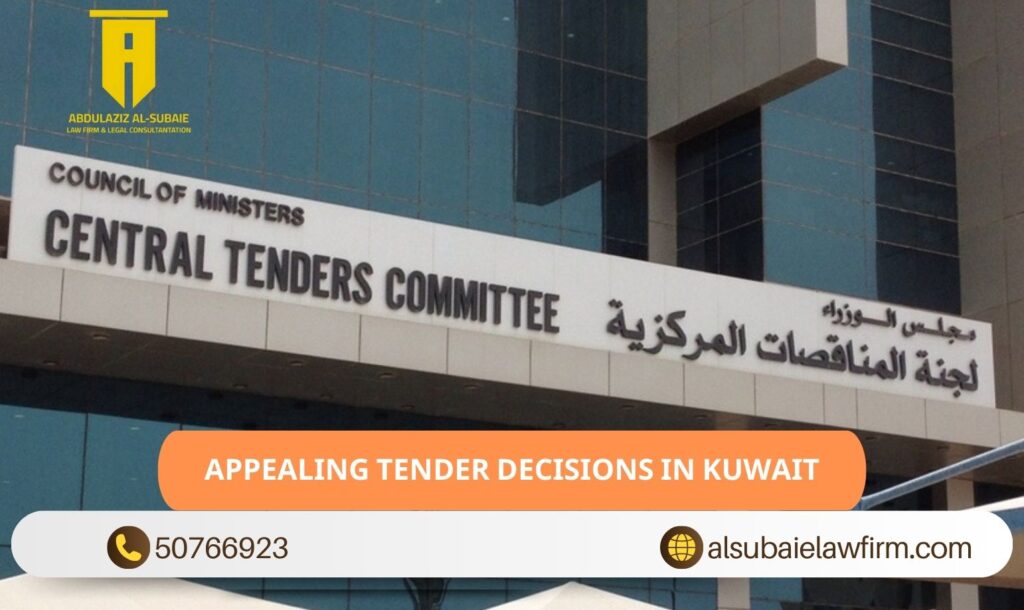
Appealing Tender Decisions in Kuwait Appealing tender decisions in Kuwait is a legal remedy permitted under Kuwaiti Law No. 49/2016. Any bidder who believes a procurement decision to be unfair may file an appeal against that decision in its various forms. The process safeguards participants’ rights in public procurements and establishes binding rules for review and redress. What Does Appealing Tender Decisions in Kuwait Entail ? An appeal against tender decisions allows aggrieved bidders to challenge administrative acts that affect their procurement rights. Grounds for appeal include: Evaluation manipulation. If the award result stems from improper scoring or hidden criteria, an appeal—supported by evidence—may overturn the decision. Breach of tender conditions. A failure by either the procuring entity or the grievance committee to enforce published requirements or maintain transparency entitles a bidder to contest the outcome. Unequal treatment of bidders. Any discriminatory practice in scoring or eligibility criteria may be challenged as a violation of equal-opportunity principles. Steps to File an Appeal Against Tender Decisions in Kuwait Prepare a written appeal petition detailing the decision you contest, the factual and legal grounds, and supporting documents. Submit your appeal to the procuring authority or the designated grievance committee. Have your appeal registered in the official procurement record—a critical step for procedural validity. Receive a written receipt indicating the date of filing. If your challenge concerns missing documentation or unmet conditions, you may be asked to supply the required evidence. The authority reviews your submission, examines all relevant records, and hears your oral or written explanations. The competent committee announces its final ruling—either upholding or rejecting your appeal—within seven days of the filing date. Timeframe for Appealing Tender Decisions in Kuwait You must file your appeal within seven days from the date the contested decision is published or communicated to you, whichever precedes. Appeals submitted after this window are automatically dismissed as inadmissible. If an appeal is accepted, the decision must include corrective measures, and the head of the Central Tenders Committee must be notified within seven days. Why Retain a Specialized Lawyer for Tender Appeals ? A lawyer experienced in procurement disputes offers: Case viability assessment and guidance on procedural prerequisites. Drafting of technically and legally robust pleadings and evidentiary dossiers. Submission of the appeal under Kuwait’s Civil and Commercial Procedure Law and applicable procurement regulations. Representation before administrative bodies, grievance committees, and courts. Strategic advocacy to protect your bidding rights and secure remedial orders. Contact Abdulaziz Saud Al-Subaie & Partners for expert support—book your consultation here. Procedures for Administrative Review Before the Central Tenders Committee File your appeal before the designated pre-contract review authority or grievance body. If adverse, the decision may be appealed further before the judicial bodies with jurisdiction over procurement disputes; their rulings are final and not subject to further challenge. In urgent cases, you may seek provisional relief (injunctive orders) without affecting your core appeal rights. Grievances must be lodged within seven days of the procurement decision. Frequently Asked Questions Can I appeal any tender decision in Kuwait? Yes, any bidder may appeal decisions of the Central Tenders Committee—so long as all statutory conditions and deadlines under Law No. 49/2016 are met. When can I file an appeal? Common grounds include breach of tender conditions, undue discrimination among bidders, and evidence of evaluation manipulation. How do I renew my Central Tenders Committee certificate? Visit the official procurements website, log in or register, select certificate renewal, upload requested documents, pay fees, and submit your renewal request. By following these guidelines and engaging a procurement-specialist lawyer, you can effectively safeguard your rights and secure a fair decision when appealing tender decisions in Kuwait.

Top debt collection lawyer in Kuwait
blog en, Latest News, Legal Consultation

Debt Collection Lawyer in Kuwait 50766923 Recover Your Funds

For sure, appointing a debt collection lawyer in Kuwait ensures full legal compliance and swift recovery of your money. Their expertise in negotiating with debtors, initiating legal proceedings, and enforcing judgments significantly improves your chances of successful debt recovery. Debt collection typically involves following up on overdue payments from individuals or companies, encompassing negotiations and the necessary legal steps to reclaim outstanding amounts. Expertise and Legal Knowledge Our lawyers possess in-depth knowledge of Kuwait’s debt recovery laws, increasing the likelihood of repayment. Skilled Negotiation They communicate and negotiate effectively with debtors, using professional representation to encourage settlement without court intervention. Strategic, Case-Specific Approach Each case is handled with a tailored strategy that addresses its unique details, maximizing results for creditors. High Success Rates By deploying proven legal procedures and strategic follow-through, our lawyers achieve top success in timely debt collection. Preserving Business Relationships We aim to maintain creditor-debtor relationships, prevent harassment claims, and foster opportunities for amicable resolution. Focus on Your Core Business Outsourcing debt recovery to professionals reduces your operational burden and ensures efficient cashflow management. Legal Procedures Employed by a Debt Collection Lawyer in Kuwait • Demand Letters Drafting and sending formal notices to debtors, clearly stating the outstanding amounts and requesting payment. Often, this prompts settlement without further legal action. • Negotiation and Settlement Representing you in discussions to reach an out-of-court agreement that satisfies both parties and avoids litigation. • Lawsuits as a Last Resort Filing judicial claims when negotiations fail, compelling the debtor to appear in court and answer for non-payment. • Obtaining and Enforcing Judgments Securing a court judgment and executing it—such as through asset seizure or garnishment—to enforce repayment. Why You Should Hire a Debt Collection Lawyer in Kuwait Handling debt recovery personally or through collection agencies can be costly, time-consuming, and damaging to your reputation. A specialized lawyer: Navigates complex legal requirements and procedural deadlines. Reduces the financial and emotional strain of litigation. Leverages professional pressure tactics known to compel payment. Manages multiple debtor cases efficiently under one roof. When creditors proceed to sue, delays and failed communications often compound the problem. A skilled lawyer preempts these issues, improving the odds that a court will rule in your favor. Top Kuwaiti Debt Collection Lawyer Contact the expert debt collection lawyers at Al-Subaie Law Firm. They offer: Extensive experience in debt recovery legislation and enforcement. Meticulous case preparation, leveraging every legal avenue against the debtor. Persistent follow-up until your funds are returned. Transparent fee structures and clear retainer agreements. A sterling local reputation backed by numerous successful cases. Debt Lawyer vs. Debt Collection Agency Feature Debt Collection Lawyer Debt Collection Agency Legal Expertise In-depth knowledge of Kuwaiti law; can draft and file lawsuits Limited legal scope; cannot represent in court Negotiation Quality High-level legal advice on complex cases Basic settlement communications Suitability Large, high-value, or complex debts Small, routine debts Follow-Through Full litigation and enforcement Vendor or commission-based follow-up Fees Fixed or hourly legal fees Percentage of amounts collected Contact Al-Subaie Law Firm & Legal Consultancy at 50766923 to learn how we can recover your overdue debts efficiently and professionally. Whether your case is straightforward or highly complex, our experts have the tools and legal authority to compel payment and restore your cash flow.

Our Legal Consultation Service for Individuals
blog en, Legal Consultation

Legal Consultation for Individuals – 50766923 – 24/7 Support

Legal consultation for individuals is one of the most vital services you can secure in urgent legal scenarios requiring the swift intervention of an expert lawyer. A moment’s hesitation or a misstep could lead to serious complications or the forfeiture of your rights. If you’re facing a situation and don’t know the correct course of action, get a quick telephone consultation to protect your legal interests and avoid unintended consequences. Our 24/7 Legal Consultation Service for Individuals Many personal legal issues arise unexpectedly, and obtaining instant advice helps you avoid disputes and take the right steps without waiting for standard office hours. Our law firm offers around-the-clock phone consultations, so you receive immediate answers to your pressing questions and can act confidently. However, since the quality of advice varies between lawyers, choose your advisor carefully. The right attorney will provide you with clear guidance on your case, helping you understand your rights and outlining detailed solutions—even for complex matters like divorce, family disputes, or real-estate issues. Why Choose Abdulaziz Al-Subaie Law Firm & Legal Consultancy? Abdulaziz Al-Subaie Law Firm & Legal Consultancy (50766923) is Kuwait’s leading provider of legal consultation for individuals. We combine deep legal expertise with an acute understanding of your needs. Our team of specialists offers tailored advice across all areas of law, ensuring you receive practical, effective solutions designed around your personal or professional situation. Thanks to our comprehensive knowledge of Kuwait’s latest legislation, we guarantee you the best outcome for your case. With our 24/7 availability, you’ll never face a legal question alone—our experts are always on hand to respond immediately and safeguard your rights. Advantages of a 24/7 Legal Consultation Office in Kuwait Receive legal advice whenever you need it, so you never miss an opportunity to make the right decision. Fast response times are crucial for resolving urgent cases and minimizing potential fallout. Round-the-clock service offers flexibility for those unable to meet during regular hours. Emergency situations can arise at any time—your lawyer should be ready whenever you are. Some firms even provide free initial consultations, allowing you to seek help without worrying about cost. The Importance of Legal Consultation in Kuwait Gain a clear overview of your legal issue, helping you understand your rights and options. Establish a strong framework for handling disputes before they escalate into full-blown litigation. Avoid legal pitfalls by learning the relevant laws and regulations and steering clear of infractions. Benefit from a comprehensive legal analysis that informs timely, accurate decision-making. Prevent problems caused by misunderstandings or procedural gaps. How to Obtain Legal Consultation for Individuals in Kuwait Select a specialist from Abdulaziz Al-Subaie Law Firm & Legal Consultancy to guarantee reliable advice. Contact us by phone or email to schedule a consultation or receive immediate instructions. Review client testimonials to gauge service quality. Prepare your questions and documents in advance to maximize the session’s effectiveness. Follow up on any recommended procedures promptly to achieve the desired outcome. Free Telephone Consultations We offer no-cost phone consultations in a variety of practice areas, including: Civil matters such as tenancy and compensation claims. Criminal issues, including drug offenses and misdemeanors. Personal status disputes like divorce and alimony. Labor rights and employment-related conflicts. Commercial concerns involving contracts and corporate governance. Tips for Maximizing Your Free Legal Consultation Gather all relevant documents—contracts, invoices, correspondence—to enable precise guidance. Plan your questions in advance and focus on your most urgent concerns. Listen carefully and take notes on every recommendation for future reference. Explore government programs or professional associations offering rapid legal advice. Consider trainee lawyers or clinics that may provide low-cost or free counsel on basic matters. Frequently Asked Questions Who is the best legal consultant in Kuwait? Abdulaziz Al-Subaie Law Firm & Legal Consultancy at 50766923. How are attorney’s fees determined? Fees vary by case type and the lawyer’s experience level. How can I get a free consultation? Prepare your questions and call our office for an immediate phone session or schedule a face-to-face meeting. When is a free consultation insufficient? For complex or incomplete cases, your lawyer may request a formal office visit to gather full details and discuss fees. Can I get legal advice by phone 24/7 in Kuwait? Yes—our attorneys are available around the clock for phone consultations. In conclusion, legal consultation for individuals is indispensable in urgent situations that cannot tolerate delay. Secure your rights today with expert advice available 24 hours a day.

Best Bank Lawyers in Kuwait
Banking and financial sector, blog en

Bank Lawyers in Kuwait 50766923 Legal Solutions for Banking

Best Bank Lawyers in Kuwait If you’re searching for a bank lawyer in Kuwait, you’ve come to the right place. Banking and financial transactions law governs the licensing, operation, and oversight of banks, deposit institutions, mortgage lenders, and other regulated financial service providers across Kuwait. Corporations and financial institutions require specialized legal expertise to manage these complex operations and mitigate associated risks. A lawyer specializing in banking and finance law plays a pivotal role in overseeing such transactions. Here’s how our top attorneys assist clients with these matters. How a Bank Lawyer Helps You At Al-Subaie Law Firm & Legal Consultancy, we offer tailored legal services to individuals and businesses facing issues in the banking and financial sectors. Key services include: Advising on the latest banking regulations, ensuring compliance, and notifying clients of regulatory changes. Guiding secured and unsecured lending processes, making sure your legal rights are clear and enforceable. Representing clients in financial disputes, achieving effective resolutions through litigation, arbitration, or negotiation. Counseling on capital-market regulations and related financial services. Assisting companies in insolvency proceedings and offering recovery solutions. Managing asset and wealth-management matters, providing legal frameworks that align with regulatory requirements. Reviewing banking contracts and agreements to ensure legal soundness and transaction success. Handling anti–money-laundering, fraud investigations, and other financial crime issues. Common Banking Disputes in Kuwait Our bank lawyers are well-versed in the most complex banking disputes, including: Cheques and negotiable instruments issues, forgery, and manipulation: bounced cheques, forged signatures, or misuse of cheques as collateral. Money laundering and financial-crime cases: advising on fund legality, defending against allegations, and court representation. Loan and credit-facility disputes: non-payment, delayed payments, penalty enforcement, and restructuring negotiations. Real-estate financing, wire-transfer disputes, financial fraud, and banking-contract claims. How to Choose a Skilled Bank Lawyer in Kuwait Selecting a specialized attorney is crucial for your case’s success. Consider these factors: Proven experience handling all types of banking transactions and disputes. In-depth knowledge of Kuwait’s financial legislation and regulatory framework. Positive client reviews and testimonials available online. Trustworthiness, client confidentiality, and a preference for negotiated settlements when feasible. Transparent fee structures and clear explanations of legal costs upfront. About Al-Subaie Law Firm & Legal Consultancy – 50766923 We are one of Kuwait’s leading legal practices, with over 20 consultants across all legal disciplines, particularly in corporate banking and finance. Serving local, regional, and international clients, we strive to meet every client’s needs and deliver 100% guaranteed results. For a free consultation, please call us to schedule an appointment. Frequently Asked Questions What is the contact number for the best bank lawyer in Kuwait? 50766923 Who is the top bank lawyer in Kuwait? All attorneys at Al-Subaie Law Firm & Legal Consultancy are recognized as Kuwait’s leading banking-law specialists. In conclusion, choosing an experienced bank lawyer with deep regulatory knowledge and up-to-date expertise is vital for achieving satisfactory outcomes. Contact us today to address your banking-law challenges effectively.

When to File Lawsuit Against the Public Authority for Minors Affairs
blog en, Legal Consultation

Administrative Lawsuit Against the Public Authority for Minors Affairs

For anyone wishing to file an Lawsuit Against the Public Authority for Minors Affairs in Kuwait without relinquishing any of their legal rights—but who doesn’t know where to begin—engage a lawyer specializing in administrative law. They will execute every required step in a carefully planned manner, preventing recurring mistakes that could stall your case or jeopardize your interests. Don’t overthink it—initiate your administrative claim today before it’s too late. Why You Need an Administrative Lawsuit If you’re planning to challenge a decision or action by the Public Authority for Minors Affairs, a dedicated administrative-law attorney can help you: Clarify the scope of your claim and the rights at stake. Prepare and file all legal documents, incorporating every argument that supports your case. Avoid procedural errors that may lead to dismissal. Monitor each stage of the legal process and keep you informed, strengthening your position and expediting resolution. Abdulaziz Al-Subaie Law Firm & Legal Consultancy (50766923) is the top choice for such matters, combining deep expertise with hands-on guidance every step of the way. When to File an Administrative Lawsuit Although the Authority’s mandate covers minor-related affairs, certain circumstances justify bringing an administrative claim against it: Unlawful or procedurally defective decisions: challenge the validity of any decision that violates applicable regulations. Inaction on critical matters: request judicial intervention when the Authority refuses to decide on an urgent issue concerning a minor. Abuse of power: seek review or annulment of any decision tainted by arbitrary or excessive authority. Breach of duty: hold the Authority accountable for failing to perform its statutory obligations. Damages to minors: claim liability and fair compensation if a minor suffers harm due to the Authority’s conduct. Filing Procedures Retain a Kuwait-licensed administrative lawyer to draft your petition. Submit the petition and supporting documents to the Court Clerk of the relevant Court of First Instance. Receive a filing receipt and case number. Within three days (but no less than one week) after the first hearing date is set, the Court Clerk forwards your petition to the Public Authority for Minors Affairs. The Authority has 30 days from notification to file its response and evidence with the Court Clerk. Required Documents for Lawsuit Against the Public Authority for Minors Affairs The petition drafted by your lawyer. A copy of the claimant’s civil-ID and the lawyer’s power of attorney. The administrative decision or action under challenge. Evidence supporting your claim (e.g., medical reports, financial records). Proof of payment of court fees. Importance of Legal Representation A specialized administrative-law attorney will: Advocate on your behalf before administrative and judicial bodies. Advise you on all procedural and substantive aspects to secure your rights swiftly. Negotiate settlements or pursue amicable dispute resolution when possible. Track case developments and present appropriate defenses at hearings. Gather and submit all necessary evidence to bolster your claim. Key Tips Before You File Lawsuit Against the Public Authority for Minors Affairs Ensure the petition is signed by you or your attorney. Attach original or certified copies of all documents. Typically, submit a formal complaint to the Authority before approaching the court. Collect any administrative rulings or correspondence that support your case. Attend all hearings on time and maintain close coordination with your lawyer. Financial Claims for Minors Claims for monetary entitlements on behalf of a minor are governed by Article 45 of Kuwait’s Civil and Commercial Procedure Law. The petition must include: Claimant’s name, address, profession, and legal representative. Respondent’s details for Lawsuit Against the Public Authority for Minors Affairs. A clear statement that the action concerns the minor’s financial entitlements. Factual background, grounds for payment, and proof of creditor’s default despite notification. Relevant statutory provisions and precedent rulings from the Court of Cassation. Appeals Before the Court of Cassation The Public Authority for Minors Affairs may appeal against adverse decisions to the Court of Cassation, which: Reviews only the correct application of law—not the factual findings. May uphold or overturn the lower court’s ruling based on legal errors. Issues its judgment strictly in accordance with procedural and substantive law. Frequently Asked Questions What is the Public Authority for Minors Affairs? An autonomous body under the Minister of Justice, endowed with guardianship powers and duties over minors’ persons and estates. What services does it provide? Guardianship of unborn children or those without guardians, management of their funds, and oversight of guardians and trustees. How is an administrative lawsuit filed? By submitting a signed petition to the Court Clerk of the Court of First Instance, registered in the administrative cases registry. Who is the best administrative-law attorney for these cases? Abdulaziz Al-Subaie Law Firm & Legal Consultancy at 50766923, available 24/7. In conclusion, understanding and following these steps will equip you to file a well-founded administrative lawsuit against the Public Authority for Minors Affairs in Kuwait and secure your legal rights efficiently.

Best Cheque Lawyer in Kuwait
blog en, Criminal Cases, Legal Consultation

Cheque Lawyer in Kuwait 50766923 Expertise in Financial Cases

Engage a Cheque Lawyer in Kuwait and Fully Protect Your Legal Rights Turn to the services of a cheque lawyer in Kuwait and safeguard your legal rights in full. Whether you are the drawer of a cheque or the payee of a dishonoured cheque seeking to file a lawsuit to recover your entitlements, a specialist in Kuwaiti law will guide you through every procedural step and monitor your case until you secure a favourable judgment. Best Cheque Lawyer in Kuwait If you encounter any legal issue concerning cheque disputes and need effective legal assistance under Kuwaiti law, Abdulaziz Al-Subaie Law Firm & Legal Consultancy is your top choice. With extensive experience in cheque-related cases and an in-depth grasp of Kuwaiti statutes and regulations, you can rely on sound advice and robust representation in court. Why You Need a Lawyer for Cheque Cases A lawyer plays a pivotal role in defending your position by presenting evidence and arguments to exonerate you or mitigate your liability. He facilitates amicable settlements between parties as an alternative to litigation, helping you avoid legal penalties and expedite resolution. You receive tailored legal counsel—whether you are the defendant or the claimant—to make informed decisions at every turn. The attorney prepares and files all required court documents on your behalf and adheres strictly to procedural rules. He negotiates with the public prosecutor and delivers a forceful defence strategy aimed at reducing penalties or altering the charges against you. The lawyer gathers compelling, admissible evidence and presents it in court, regardless of a case’s complexity. He files appeals against unjust rulings and takes all necessary legal measures to secure a favourable outcome. The Role of a Bounce Cheque Lawyer in Kuwait When you engage a bounce-cheque lawyer in Kuwait, you gain essential legal support: He provides comprehensive legal advice and outlines the steps needed to resolve your cheque dispute. The lawyer represents you in court, assisting with evidence collection and formulating defences during hearings. He explores alternative dispute-resolution methods, such as settlement or mediation, to avoid protracted litigation. His primary objective is to protect your interests and ensure justice in your case. The attorney tracks your case diligently by attending all hearings and fulfilling deadlines without delay. How to Choose a Cheque Lawyer in Kuwait Selecting the right specialist can determine the outcome of your case. Look for: Substantial experience in financial and cheque-related litigation to ensure deep legal knowledge. Strong legal acumen and communication skills to keep you informed at every stage. Official accreditation and a proven track record, as evidenced by a clean professional record. Transparent discussion of fees and costs upfront to prevent unexpected expenses. Expertise in handling bounce-cheque matters and a thorough understanding of relevant Kuwaiti laws. The ability to craft a robust defence that addresses all facets of your case and exploits any procedural gaps. Legal Procedures Followed by a Cheque Lawyer in Kuwait Appoint a specialised, licensed cheque lawyer in Kuwait. Review and verify your cheque documents to determine if the cheque is indeed dishonoured. File a formal report with the competent authorities and summon the signatory for investigation. Submit the case to the judiciary, where the cheque is seized and the applicable laws are enforced. Rely on your lawyer’s expertise to navigate these stages efficiently and effectively. Is Issuance of a Cheque Without Sufficient Funds a Misdemeanour or a Felony? If the prescribed penalty is imprisonment of up to three years, the offence is classified as a misdemeanour. Under Article 237 of the Kuwaiti Penal Code, issuing a dishonoured cheque carries up to three years’ imprisonment or a fine not exceeding 500 KWD, or both—thereby constituting a misdemeanour. Should the penalty exceed three years, the offence escalates to a felony, particularly in cases involving large-scale or repeated fraud. Frequently Asked Questions About Cheque Lawyers in Kuwait When does a dishonoured cheque lapse in Kuwait? It lapses one month after issuance for local cheques and three months for cheques drawn outside Kuwait but payable locally. Who is the best bounce-cheque lawyer? Abdulaziz Al-Subaie Law Firm & Legal Consultancy is widely recognised as the leading practice in this field. What is the contact number for the top cheque lawyer in Kuwait? Call 50766923 for guaranteed legal services from Abdulaziz Al-Subaie. How much are attorney’s fees in Kuwait? Fees vary by case but generally range from 1,000 to 5,000 KWD. When does a judgment in cheque cases become unenforceable? After 25 years from the date of the judgment. In conclusion, appointing the best cheque lawyer in Kuwait is essential for achieving swift, satisfactory results in accordance with the law.

Foreign Investment Lawyer in Kuwait
blog en, Companies

Best Foreign Investment Lawyer in Kuwait 50766923

Foreign Investment Lawyer in Kuwait A foreign investment lawyer in Kuwait is the ideal choice if you are considering establishing an investment project in Kuwait. The country offers a thriving investment environment and actively encourages foreign investors to enter the market. Contact Abdulaziz Al-Subaie Law Firm & Legal Consultancy Group at 50766923 to learn about project establishment procedures and all the conditions required to ensure a successful investment. Who Is the Best Foreign Investment Lawyer in Kuwait? The Abdulaziz Al-Subaie Law Firm & Legal Consultancy Group (50766923) includes Kuwait’s leading foreign investment lawyer, who is distinguished by: Extensive professional expertise in investment law, delivering tailored legal solutions under Kuwaiti legislation. Precise drafting of all commercial contracts to safeguard investors’ full rights. Comprehensive support throughout the establishment process, from selecting the company’s headquarters to obtaining the corporate license. Expert advice on international trade law, ensuring compliance with all local regulations. In-depth knowledge of investment statutes, offering continuous counsel and full support to guarantee project success and market stability. Criteria for Choosing a Foreign Investment Lawyer in Kuwait When selecting a foreign investment lawyer, consider the following key criteria: Verify that the lawyer is duly licensed and has a reputation for handling foreign investment matters. Review the lawyer’s track record to confirm their ability to provide integrated solutions for complex investment issues. Assess client reviews to gauge the lawyer’s standing in the field of foreign investment. Ensure the lawyer can deliver diverse, high-quality legal advice in accordance with local and international investment laws. Confirm the lawyer’s capacity to protect investors’ rights, advance their interests, and achieve favorable project outcomes. These criteria apply to the top foreign investment lawyer at Abdulaziz Al-Subaie Law Firm & Legal Consultancy Group. Call now at 50766923. Kuwaiti Investment Promotion Law Kuwait offers foreign investors numerous opportunities across various sectors to strengthen its economic environment. Foreign investment is a preferred option due to Kuwait’s strategic location in the Arabian Gulf and its advanced infrastructure. The Direct Investment Promotion Authority provides legal and regulatory facilitation for foreign investors, continually updating the investment law to suit global investors. It streamlines investment conditions, eases procedures for commencing business, and ensures a stable legal framework. For more details on investment opportunities in Kuwait, contact Abdulaziz Al-Subaie Law Firm & Legal Consultancy Group at 50766923. Our leading foreign investment lawyer will address all your inquiries with precision. Available Investment Modalities for Foreign Investors in Kuwait Under the Investment Promotion Law, foreign investors may: Establish a Kuwaiti company under the Companies Law, provided they own 100% of the company’s share capital. Open a branch of a foreign company in Kuwait for investment purposes. Set up a representative office to study market conditions and support production without engaging in commercial activities. Investors must meet all domestic investment requirements. Contact 50766923 to consult with the best foreign investment lawyer in Kuwait. Advantages of Foreign Investment in Kuwait Kuwait provides foreign investors with a wide range of benefits, including: Freedom to repatriate profits and capital abroad without restrictions. Tax exemptions on investment projects for up to 10 years, enhancing profitability. The right to employ foreign labor in compliance with local regulations, enabling recruitment of highly skilled professionals. Continuous legislative amendments to facilitate investment, attracting both local and foreign capital. Contact the leading foreign investment lawyer at Abdulaziz Al-Subaie Law Firm & Legal Consultancy Group at 50766923 to launch your investment project. Procedures for Foreign Investment in Kuwait To establish a successful foreign investment project, follow these steps: Submit an application to the Direct Investment Promotion Authority detailing the project, objectives, and financial estimates. Attach the necessary documents based on the chosen investment type. The Authority conducts a comprehensive review, assessing economic feasibility and regulatory compliance. Upon approval, the Licensing Authority issues a decision authorizing the investment activity. Register the project with the Ministry of Commerce and Industry after licensing to obtain the commercial register certificate. Contact Abdulaziz Al-Subaie Law Firm & Legal Consultancy Group at 50766923 to outline all required procedures. Key Rights of Foreign Investors in Kuwait Kuwait grants foreign investors a range of rights to ensure transparency and legal protection: The right to establish a project independently without needing a Kuwaiti partner under the Direct Investment Promotion Law. Equal treatment for local and foreign investors, prohibiting discrimination. Freedom to repatriate profits abroad after fulfilling all financial obligations. Protection against expropriation without due process, with entitlement to compensation if expropriation occurs. Access to international arbitration or Kuwaiti courts in the event of disputes. Exemptions from taxes and customs duties for up to 10 years, varying by project type. Safeguard your rights by contacting Abdulaziz Al-Subaie Law Firm & Legal Consultancy Group at 50766923. Frequently Asked Questions What is the best foreign investment lawyer in Kuwait? Abdulaziz Al-Subaie Law Firm & Legal Consultancy Group hosts Kuwait’s top foreign investment lawyer, experienced in all procedures for establishing various company types. They provide full support to foreign investors until company formation, with comprehensive knowledge of all applicable investment regulations. What services does a foreign investment lawyer in Kuwait provide? A foreign investment lawyer offers advanced services, including: Obtaining all necessary licenses for foreign investment. Legal consulting on all investment aspects. Robust contract drafting and negotiation. Legal solutions for commercial disputes and international arbitration. Representation before judicial and regulatory bodies. Contact Abdulaziz Al-Subaie Law Firm & Legal Consultancy Group at 50766923 for unparalleled protection of your rights and a secure investment journey in Kuwait.

What Is a Holding Company in Kuwait
blog en, Companies

Establishing a Holding Company in Kuwait Procedures

Are you looking to establish a holding company in Kuwait but concerned about the various procedures involved? Our team provides the best specialized lawyers in this and other commercial fields, backed by extensive experience. What Is a Holding Company in Kuwait? Before setting up a holding company in Kuwait, it is important to understand its nature: A holding company owns shares in one or more other companies and controls their management. It is structured as a limited liability company whose sole purpose is to hold and manage equity stakes. The holding company acts as a parent entity overseeing subsidiary companies, whether they operate in the same sector or across diverse activities. Its goal is to own shares rather than engage directly in the subsidiaries’ operational or production processes. Conditions for Establishing a Holding Company To found a holding company in Kuwait, the following conditions must be met: The company’s manager must be at least 21 years old. The manager must hold Kuwaiti nationality or be a citizen of a GCC country. The manager must not work in any governmental sector. No partner may have a criminal record or final court judgment against them. Kuwaiti partners must hold a majority of the share capital; non-Kuwaitis may not exceed 49%. Any foreign partner must hold a valid residence permit in Kuwait. Each partner must submit proof of payment of their capital contribution. A company cannot be formed solely by spouses unless there is a third partner. All partners’ and managers’ criminal records must be clear of commercial judgments. Permissible Activities for a Holding Company A holding company in Kuwait may engage in the following activities: Managing or financing contracting and transportation firms in which it owns shares. Lending to, guaranteeing, or financing subsidiary companies. Participating in the formation and management of collective investment funds. Holding intellectual property rights, such as trademarks. Investing in bonds, securities, and trading in stocks. Operating open or closed-ended investment funds. Documents Required for Incorporation When establishing a holding company, you must prepare: A copy of the civil ID for each manager and partner. A certificate from the Public Institution for Social Security for each manager. A capital‐deposit certificate showing the partners’ reserved capital throughout incorporation. A tenancy contract or lease receipt for the company’s headquarters. A certificate issued by the Public Authority for Civil Information containing the company’s automated number. If a partner is foreign, a sponsor’s approval letter for participation. A power of attorney with the agent’s signature and a notarized certificate from the Kuwait Chamber of Commerce and Industry. A work permit from the relevant authority allowing the foreign partner to conduct this activity and transfer of the manager’s residence to the company. We handle all steps to streamline the process. Contact Abdulaziz Saud Al-Subaie Law Firm & Legal Consultancy Group by clicking here to book your appointment. Frequently Asked Questions What are the conditions for setting up a closed joint-stock company in Kuwait? Our firm guides you through every requirement to establish your company swiftly and efficiently. How do I form a holding company? Identify suitable investment sectors. Determine the financing mechanism to achieve your goals. Develop a growth and profit-enhancement plan. Analyze competitors’ strengths and weaknesses. Continuously evaluate the company’s financial position for optimal performance. What are the key requirements for a holding company? A holding company must not be a single-member entity; none of its partners may be government employees. Meeting all establishment criteria ensures smooth incorporation. We have covered all procedures, conditions, and documentation needed to establish a holding company in Kuwait. Abdulaziz Saud Al-Subaie Law Firm & Legal Consultancy Group is ready to facilitate your incorporation process. Click here to schedule your consultation today.

Legal Reasons for Removal of Manager of a Limited Liability Company
blog en, Companies

Removal of Manager of a Limited Liability Company in Kuwait

Removal of Manager of a Limited Liability Company in Kuwait is a critical topic, as many partners in such companies are unaware of their rights and authorities. Here we explain the legal grounds for removal, the conditions that must be met, the removal procedures, and the necessary steps to effect the removal. Manager Appointment and Grounds for Removal Under Article 103 of Law No. 1/2016, the manager of a limited liability company (LLC) is appointed either by the partners in the company’s memorandum of association or, if no appointment is made therein, by an ordinary general assembly of partners. The manager holds full authority to run the company within the scope of that appointment. In practice, removing a manager who was appointed in the memorandum requires amending the company’s founding contract, which in turn demands the requisite majority vote at a general assembly meeting. Legal Reasons for Removal of Manager of a Limited Liability Company Articles 104 and 106 of Law No. 1/2016 provide that a manager may be removed for: Committing crimes involving fraud. Committing serious errors that cause substantial harm to the company. Violating any provision of Article 106 of the Companies Law. Managing a competing or similar business undertaking. Contracting with the company for personal benefit or on behalf of others. Removal must be initiated by one or more partners holding at least one-quarter of the company’s capital. A judicial order, issued upon a lawsuit detailing the precise legal grounds, is required to effect the removal, and it must be executed in accordance with the Companies Law. For legal advice, contact Abdulaziz Al-Subaie Law Firm & Legal Consultancy Group at 50766923. Conditions for Removal of Manager of a Limited Liability Company To remove or appoint a manager, the following conditions apply: If the new manager is not already a partner, an electronic request must be made to verify a clean criminal record. The request is filed electronically in the commercial register via the Ministry of Commerce and Industry portal. A suitable meeting date must be scheduled, and the general assembly minutes submitted within 30 days. The company’s commercial license must be valid. The meeting minutes must be signed by the manager or by the general assembly chair. Documents Required for Removal of Manager of a Limited Liability Company Key documents include: Minutes of the general assembly meeting, signed by the manager if not appointed in the memorandum. Signatures of all (or most) partners approving the removal. Details of the manager’s powers and their distribution among other managers, if any. Company financial guarantees. Minutes of an extraordinary general assembly meeting if the manager was appointed in the memorandum. A removal request signed by the manager if they did not sign the extraordinary meeting minutes. Current commercial license. Civil ID copy of the outgoing manager. For a full list of documents, call Abdulaziz Al-Subaie Law Firm & Legal Consultancy Group at 50766923. Methods of Removal of Manager of a Limited Liability Company Removal by Ordinary General Assembly The partners vote during an ordinary general assembly; a majority in favor removes the manager. Removal by Court Judgment The court issues a judgment specifying the termination date of the manager’s tenure. Such removal does not affect the manager’s ownership rights or capital contributions. Book your consultation with our specialist corporate lawyers at Abdulaziz Al-Subaie Law Firm & Legal Consultancy Group via 50766923 to safeguard your rights. Frequently Asked Questions How can a manager of an LLC be removed? By a majority vote in an ordinary general assembly or by a court judgment. How do I engage a corporate lawyer for removal? Contact Abdulaziz Al-Subaie Law Firm & Legal Consultancy Group at 50766923 to schedule the earliest possible appointment. What are the manager’s powers in an LLC? The manager handles all legal and financial matters, makes operational decisions, and acts within the mandate set by the Companies Law. How is the manager changed? Through an extraordinary general assembly resolution, followed by amending the memorandum and submitting required documents to the Ministry of Commerce and Industry. What procedures amend an LLC’s memorandum? File a request to amend the memorandum, submit the original signed meeting minutes, and provide the amended memorandum with updated provisions. Can a removed manager appeal the removal? Yes. They may challenge the decision in court if due process or clear grounds were lacking. What legal steps must be followed for removal? Adhere to the Companies Law procedures and obtain the necessary partner resolutions. Is the removed manager entitled to compensation? Compensation depends on the service contract; if removal lacks clear cause, contractual indemnities may apply. Will removal disrupt company operations? Short-term instability may occur, but correct changes can enhance company performance and strategic direction. For legal assistance in removing an LLC manager, contact Abdulaziz Al-Subaie Law Firm & Legal Consultancy Group at 50766923. Our team will guide you through each step, document requirement, and procedural detail to ensure a smooth process.

Trademark Registration in Kuwait know the Registration Steps and Procedures (1)
blog en, Companies

Trademark Registration in Kuwait know the Registration Steps and Procedures

Trademark Registration in Kuwait : Know the Registration Steps and Procedures Trademark registration in Kuwait is a crucial step for establishing a company and conducting commercial activities. It gives your products or services a distinctive identity and protects them legally, helping you stand out among competitors. Below are the key requirements, procedures, fees, and documents needed to register a trademark and obtain the official certificate. 1. Steps to Register a Trademark in Kuwait Visit the Ministry of Commerce and Industry headquarters and proceed to the Trademarks and Patents Registry Department. Submit a trademark registration application to the competent department if you have a local presence in Kuwait. Alternatively, file the application through a duly authorized agent headquartered in Kuwait and registered with the official list of trademark agents. Ensure the application includes: A clear reproduction of the mark to be registered. Applicant’s full name, address, and nationality. A precise description of the goods and/or services covered by the trademark. The application must be signed by the applicant, the authorized agent, or their legal representative. The Registry Department will conduct a substantive examination within 90 days from the filing date, issuing either approval or refusal. The decision (approval or refusal) will be communicated in writing or electronically to the address provided in the application. Pay the prescribed registration fees within 30 days of receiving the notice of approval; failure to do so will be deemed a withdrawal of the application. For expert legal support, contact Abdulaziz Al-Subaie Law Firm & Legal Consultancy at 50766923. 2. Online Trademark Registration in Kuwait You can complete your trademark registration electronically by following these steps: Access the Ministry of Commerce and Industry’s official website and select the “Online Trademark Registration” portal. Settle all registration fees (currently 240 Kuwaiti Dinars). Ensure you are registered on the “Hawiyati” identity application. Upon submission, the trademark undergoes an intellectual property rights examination. Once approved, it is published in the official gazette (Kuwait Today). After publication and lapse of the opposition period, you will receive your registration certificate, enabling you to pursue international trademark protection. 3. Documents Required for Online Registration Completed trademark registration form. Twelve (12) clear reproductions of the trademark. Copy of the commercial license. Copy of the commercial register. Power of attorney, duly signed and legalized. 4. Conditions for Trademark Registration in Kuwait Application must be filed by the business owner, their duly authorized legal agent, company director, or their deputy. Foreign applicants must appoint a local agent to file the application. The mark must comply with the standards set out in the Kuwaiti Trademarks Law and its Executive Regulations. No identical or confusingly similar trademark may already be registered. Fees must be paid within 30 days of the acceptance date. If no opposition is filed within 60 days after publication, the registration becomes final. Each application covers a single class of goods or services; additional classes require separate applications. In case of multiple applications for the same mark, processing is suspended until one party withdraws or a final court ruling is issued. For detailed conditions, call Abdulaziz Al-Subaie Law Firm & Legal Consultancy at 50766923. 5. Additional Papers Required for Trademark Registration Four (4) reproductions of the trademark, matching the registered specimen. Original, legalized power of attorney if an agent is appointed, with certified Arabic translation. Proof of commercial activity. Payment slip for the application fees. For sound marks: a written description or musical notation. For scent marks: a detailed written description. Contact Abdulaziz Al-Subaie Law Firm & Legal Consultancy at 50766923 for a comprehensive checklist and legal guidance. 6. Frequently Asked Questions Q: How do I obtain a commercial license in Kuwait? A: You must submit: A copy of the applicant’s Civil ID. A completed application form for a commercial license. A bank certificate of capital deposit. Payment receipt for the prescribed fees, in accordance with the chosen business activity. Q: How can I apply for a commercial license in Kuwait? A: Call Abdulaziz Al-Subaie Law Firm & Legal Consultancy at 50766923; a specialist lawyer will guide you through every step until the license is issued. Q: What are the types of commercial licenses in Kuwait? A: These include: Shareholding companies. Limited liability companies. Sole proprietorships. Industrial licenses. Construction licenses. Q: What is the difference between a trade name and a trademark? A: A trade name is the legal identity of a company, registered in the Commercial Register. A trademark is a symbol, logo, or design that distinguishes a company’s goods or services, registered in the Trademarks Register to secure exclusive rights. For professional end-to-end trademark registration services in Kuwait—including strategic brand advice, document preparation, and legal representation—contact Abdulaziz Al-Subaie Law Firm & Legal Consultancy at 50766923.

blog en, Latest News

Decree on the Prohibition of Mixed-Gender Classes in University Classrooms

“Al-Subaie” Clarifies the Legal Perspective on the Prohibition of Mixed-Gender Kuwait University’s recent decision to Prohibition of Mixed-Gender classes and separate male and female students has sparked a storm of debate across social media, reigniting discussions on the balance between upholding conservative values and embracing academic openness. This article examines the legal and social context of the measure and highlights Attorney Abdulaziz Saud Al-Subaie’s statements affirming that the decision rests on a firmly established statute that cannot be overridden without formal legislative amendment. The Gender Segregation Law: A Respected Legacy Since 1996 The “Gender Mixing Ban” Law: A Time-Honored Legacy from 1996 The authority for today’s policy originates in the “Gender Mixing Ban” law, enacted by the National Assembly in 1996, which mandates separate seating for male and female students at all educational levels. Although challenged before the Constitutional Court in 2015, the statute was upheld as constitutional and remains in full force and effect. Attorney Al-Subaie explains: “The Gender Mixing Ban is not a novel concept; it dates back more than twenty-eight years and has never been amended or repealed. In 2015, the Constitutional Court reaffirmed that this law does not conflict with individual rights or public freedoms but rather reflects the will of society at the time of its enactment.” Prohibition of Mixed-Gender A Shared Conservative Vision According to Al-Subaie, any claim that the law is “regressive” overlooks that it was approved through the democratic process—embodied in the election of National Assembly members—and can only be changed by submitting a legislative amendment or repeal proposal to the Assembly, followed by committee review and a parliamentary vote. Preserving Identity: A Conservatively Shared Vision Supporters of the ban argue that segregating lecture halls reduces distractions and secondary social entanglements, thereby fostering a more focused learning environment. Al-Subaie notes: “Kuwaiti society prides itself on its conservative heritage and core values. Whether at home or in school, generations have been raised to respect the privacy of each gender and to avoid unnecessary intermixing.” Opening Horizons or Closing Doors? Academic Opposition Perspectives The themes of “privacy” and “behavioral discipline” resonate strongly among families and community leaders, especially in fields where classroom occupancy often exceeds seating capacity. Proponents maintain that gender separation allows university administrations to provide a quieter, more concentrated academic setting. Opening Horizons or Closing Doors? Voices of Academic Opposition Opponents contend that mixed‐gender classrooms enrich scholarly discourse and broaden student perspectives through direct male‐female interaction. A student in the College of Arts reflects: “Our previous mixed classes enabled us to draw on each other’s diverse experiences and participate in interactive group workshops. Separation will hinder this constructive cultural and social exchange.” The Legislative Path: Amendment or Continuation? Some faculty members concur, asserting that in-class diversity stimulates creativity and innovation and simulates the open society graduates will encounter in the workforce. Practical Challenges of Implementation Full gender segregation poses significant logistical demands: • Reallocating facilities—equipping additional classrooms and designating separate buildings for male and female students; • Adjusting schedules—harmonizing lecture and laboratory times to balance supply and demand; • Hiring supplementary staff—appointing teaching assistants to accommodate the potential increase in tutorial groups and lecture sections; • Rising operational costs—upholding legal compliance while maintaining educational quality without imposing steep tuition hikes. Decree on the Prohibition of Mixed-Gender Classes in Universities Al-Subaie emphasizes that although these hurdles do not negate the university’s obligation to enforce the Gender Mixing Ban, they do call for meticulous planning by university administrators to ensure uninterrupted, high-quality instruction. The Legislative Path: Amendment or Continuation? Al-Subaie delivers a clear message regarding any prospective revision: “If society wishes to review this law, the constitutional procedure is explicit: submit a proposal to the National Assembly, have the specialized committees deliberate, and then hold a vote. There is no alternative route to amend a constitutional statute.” He adds that parliamentarians must represent their constituents’ views and take into account social and cultural developments before pursuing any changes, ensuring procedural integrity and alignment of legislation with contemporary needs. Toward a Middle Ground? A compromise may be achievable, such as segregating only certain disciplines or designating alternating mixed and single‐gender sessions, thereby allowing some level of academic openness without abandoning conservative values. Some have proposed forming university committees—including students and faculty—to monitor the decision’s impact and recommend pragmatic adjustments. Conclusion Conclusion Kuwait University’s enforcement of gender‐segregated classes underscores the enduring influence of the 1996 statute, upheld by the Constitutional Court, while the debate persists over its compatibility with modern educational paradigms and labor market requirements. Attorney Abdulaziz Saud Al-Subaie’s insights provide a definitive legal framework: the law remains binding unless and until the National Assembly enacts a formal amendment. As public opinion settles and legislators weigh in, university campuses and online forums will continue to host a vibrant dialogue between tradition and academic innovation.

Partner Exit from Companies in Kuwait
blog en, Companies

Partner Exit from Companies in Kuwait

Partner Exit from Companies in Kuwait Partner exit (takhāruj) is the legal process by which a partner withdraws from a company or relinquishes their shares without prejudicing the company’s interests. If you wish to exit your partnership smoothly and safeguard your rights, contact Alsubaie Law Firm at +965 5076 6923 for expert legal guidance. Procedures for Partner Exit A partner may withdraw by written waiver, provided they notify the company’s manager and all other partners. The withdrawing partner must fulfill all conditions set out in the Articles of Association. The Articles of Association must be amended to reflect the partner’s exit or waiver of shares. Profits and capital must be reallocated among the remaining partners per the amended Articles. If the partners consent, the company may redeem the exiting partner’s shares at their real value. Company capital must be reduced by the nominal value of the redeemed shares. Each remaining partner may claim their proportional share of the exited partner’s capital contribution. If exit occurs at year-end, the departing partner is entitled to their full share of that year’s profits and capital; exits at the beginning or mid-year are calculated on a pro-rata basis. All partners must approve and sign the amendment to the Articles following exit. Alsubaie Law Firm will handle every procedural step on your behalf. Conditions for Partner Exit Submit an exit application via the Ministry of Commerce & Industry’s online portal. Within 30 days, lodge the General Assembly’s meeting minutes approving the exit. Print and sign a formal letter addressed to the Ministry of Justice. Amend the Articles of Association and register the amendment in the Commercial Register. If shares are waived to other partners, attach a written waiver from all parties. All signatories to the amendment must attend signing in person. The company’s commercial licence must be valid at the time of filing. The Assembly’s minutes must be countersigned by the Chairman or the company’s manager. Documents Required for Exit Full Social Insurance Authority clearance certificate for the company. Latest audited financial statements or general balance sheet. General Assembly minutes showing unanimous approval of the exit. Document releasing the exiting partner from further company obligations. Valid commercial license. Civil-ID copy of the company’s manager. Draft amendment to the Articles of Association naming the exiting partner and transferee(s). If any partner objects, further steps under Article 100 of the Companies Law apply. Fees for Partner Exit 60 KWD for filing an exit application. 7 KWD for Commercial Register visa fee. 60 KWD for redistributing company shares upon waiver. Documents for Amending the Articles of Association Social Insurance Authority clearance certificate. General Assembly minutes detailing all amendments. Revised management clause if the manager changes, with undertakings from outgoing and incoming managers. For a deceased partner: certified heirs’ inventory and death certificate. Exit of a Deceased Partner Original, valid commercial license. Civil-ID copies for all heirs. Deceased partner’s death certificate and heirs’ inventory. File all documents with the Companies Directorate at the Ministries Complex. Exit of Non-Kuwaiti Partners The Commercial Companies Law does not allow forced removal of non-Kuwaiti partners for mere absence or irregular residency. Draft legislation under review would allow exit of a non-Kuwaiti partner absent for over six months, if an exit application is filed within one year of enactment. Exit from a Joint-Stock Company Provide a lease contract or title deed for company premises. Civil-ID copies of all shareholders, confirming no criminal convictions. Original share capital certificate showing the exiting shareholder’s contribution. Comprehensive data on the exiting partner’s interests. Unanimous shareholder approval and compliance with the Companies Management Law. Frequently Asked Questions How does a partner exit a company? By negotiating terms, agreeing on share valuation and payment schedule, then executing the formal waiver and Articles amendment. What conditions must be met for exit? Within 30 days: submit Assembly minutes, all waivers, and sign the Articles amendment in person. How is an exiting partner’s share valued? By agreement of the partners or through an approved auditing firm licensed by the Capital Markets Authority. For personalized legal support on partner exit in Kuwait, call +965 5076 6923. Our corporate specialists will manage your exit process efficiently and protect your interests at every turn.

Change of Trademark in Kuwait
blog en, Companies

Change of Trademark in Kuwait – Complete Guide by Alsubaie Law Firm

Change of Trademark in Kuwait Changing your trademark in Kuwait is a critical legal process that must comply with the Ministry of Commerce & Industry’s regulations. Whether you need to correct data, update ownership details or refine your mark’s scope, this guide explains every step to amend your trademark registration quickly and accurately. Why You Might Need to Change of Trademark in Kuwait • Correct clerical errors or update omitted details • Reflect a change in ownership or address • Add or remove specific goods and services from your registration • Align your mark with a new branding or marketing strategy Eligibility for Trademark Amendment To secure approval for a trademark change in Kuwait, ensure that: • Your trademark is already registered and still within its 10-year protection term • Amendments are limited to non-essential details—your mark’s distinctive character must remain intact • You are a Kuwaiti national or an officially recognized Kuwaiti agent (foreign owners must hold valid residency) • All previous registration fees are paid and your record is free of outstanding objections Step-by-Step Procedure to Change Your Trademark Visit the Ministry of Commerce & Industry’s Trademark Department in Kipco Tower, Al Sharq Obtain and complete the official amendment form with your requested changes Provide the registered owner’s name, nationality, address and entity type (individual or company) Attach a clear depiction of the updated trademark and a detailed description of the modifications Include signatures of authorized signatories—or a notarized power of attorney if an agent applies on your behalf Pay the official amendment fee (45–90 KWD) Await the Registry’s review: you’ll receive written or electronic notification of approval or rejection If approved, submit any supplementary documents within 90 days Upon final approval, the Registry publishes an official notice of changes and updates your registration record Required Documents for Trademark Amendment • Completed trademark amendment application • High-resolution image of the revised trademark • Notarized power of attorney (if filed by an agent) • Certified Arabic translation of any foreign documents • Proof of payment of amendment fees • Commercial licence copy or proof of business activity • Written descriptions for non-visual marks (audio or scent) Fees & Timeline • Amendment fee: 45–90 KWD • Processing time: 30–60 days (subject to Ministry workload) Common FAQs How long does the trademark change process take? Typically 30–60 days from submission, including the 90-day window for supplementary filings. Can the core design of my mark be altered? No – amendments must preserve the mark’s distinctive identity; only ancillary details may be updated. What happens if my amendment is rejected? You may file an appeal or request a review within 30 days of notification. Why Choose Alsubaie Law Firm? Alsubaie Law Firm specializes in trademark amendments and provides: • Expert review of eligibility and amendment scope • Accurate drafting and filing of all forms and translations • Direct liaison with Ministry officials to expedite your application • Ongoing support through appeals or supplementary submissions Contact our trademark team at +965 5076 6923 or visit our website to change your trademark in Kuwait with confidence.

Establishment of a One-Person Company in Kuwait
blog en, Companies

Establishment of a One-Person Company

Establishment of a One-Person Company in Kuwait Formation of a one-person company in Kuwait is governed by Article 86 of the Companies Law and Article 55 of its Executive Regulation (No. 287/2016). Under the Ministry of Commerce & Industry’s free micro-license scheme, entrepreneurs can incorporate a one-person company at zero cost, with approval typically issued within three business days. Conditions for Eligibility To qualify for the one-person company micro-license, applicants must meet the following criteria: • The owner and director must be at least 21 years old and not employed by the government. • The proposed business activity must appear on the permitted activities list under Ministerial Resolution No. 330/2017. • The criminal record of the owner/director must be free of commercial judgments, as certified by the MOCI. Establishment of a One-Person Required Documentation Applicants must submit: • Copy of the Civil ID (for Kuwaitis) or valid residency visa (for GCC nationals). • Criminal-record certificate for the owner/director. • Memorandum of Association authenticated by the Ministry of Justice. • Lease contract or title deed for the business premises. • Public Authority for Civil Information (PACI) number. • Public Institution for Social Security (PIFSS) letter for the Kuwaiti manager. • Any industry-specific approvals required by competent authorities (e.g., PAAET for educational activities). • Power of attorney if a representative will sign documents. • Any additional licenses or registrations mandated by the MOCI or other agencies. Incorporation Process (Online) Access the Kuwait Single Window portal. Select “Services & Transactions” → “Company Formation Services” → “Establishment of a One-Person Company.” Log in or create a business-user account. Complete the online form with company name, address, activity, capital and personal data. Upload all required documents and the authenticated Memorandum of Association. Submit your application. Establishment of a One-Person Fees and Timeline • Micro-licence service fees: 0 KWD • Estimated processing time: 3 business days Advantages of a One-Person Company • Full managerial control and operational flexibility. • Limited liability confined to the company’s capital. • Rapid, cost-free online incorporation. • Ability to scale by adding partners or converting into a multi-member company. Next Steps To initiate your one-person company incorporation in Kuwait, please contact Alsubaie Law Firm at +965 50766923. Our corporate law team will authenticate your documents, liaise with government entities, and secure your commercial license from start to finish.

Penalties for Fraud and Deception in Kuwait
blog en

Penalties for Fraud and Deception in Kuwait

Penalties for Fraud and Deception in Kuwait Legal Framework Penalties for Fraud and Deception in Kuwait : Under Article 232 of the Kuwaiti Penal Code, all elements of fraud and deception are criminalized and punishable. Alsubaie Law Firm is fully equipped to help you secure your rights. General Penalties for Fraud and Deception in Kuwait Imprisonment and Fine Anyone convicted of fraud faces up to three years’ imprisonment and/or a fine of up to 500 KWD. This applies, for example, to issuing cheques without sufficient funds and other deceptive practices. Coercion to Fingerprint, Sign or Alter Documents Compelling someone to fingerprint, sign, destroy, deface, transfer, draft or amend any document or promissory note carries up to three years’ imprisonment and/or a fine of up to 225 KWD. In aggravated cases, the penalty may be up to two years’ imprisonment and/or a fine of up to 150 KWD. Overcharging Beyond the Agreed Amount When an offender forces a victim—ready to pay an agreed sum—to pay more, the penalty can reach five years’ imprisonment and/or a fine of up to 375 KWD. This applies particularly in subscription-related fraud. Electronic Fraud and Deception Use of computer networks, information systems or the Internet to obtain money or property by deceit is punishable by up to three years’ imprisonment and/or a fine of 3,000–10,000 KWD. Legal representatives who participate in electronic fraud are jointly liable, and offenders must reimburse victims fully for all losses. Categories of Fraud and Deception Forgery involves submission of forged documents or papers to defraud. Financial fraud uses various instruments or methods to obtain money. Real estate fraud deceives victims into transferring property or land. Electronic fraud employs modern technology and the Internet to defraud. Constituent Elements of Fraud Offences Material Element The deceptive act itself misrepresents facts, misleads the victim and induces them to relinquish money or property. There must be a direct causal link between the offender’s conduct and the victim’s loss. Mental Element The offender must act willfully, with premeditation and full awareness that their conduct will harm the victim. Alsubaie Law Firm can help you gather and present the evidence needed to prove each element in court. Procedural Steps for Victims of Fraud Victims should file a written or verbal complaint at the nearest police station, Public Prosecution office or through their attorney. All incident details and available evidence must be submitted. The accused will be summoned for investigation, and, if the offence is established, the prescribed penalties under Kuwaiti law will be enforced. Why You Need a Specialist Fraud Attorney A specialist provides strategic guidance on initiating legal action and protecting your rights, expert advice at every stage, full representation under power of attorney, drafting and filing lawsuits, pursuit of fair compensation, thorough evidence presentation, and preventive oversight of your financial and commercial affairs to guard against future fraud. Frequently Asked Questions Is fraud a felony or misdemeanor? It depends on the severity and sentence. Imprisonment up to three years is typically a misdemeanor; longer sentences are felonies. What’s the difference between “fraud” and “deception”? Fraud usually involves a complex, sustained scheme of data or fact manipulation to induce surrender of assets. Deception (cheating) is an immediate misrepresentation or trick to obtain money or property. Can fraud cases be settled amicably? Yes—if the victim and offender are related, the victim may withdraw the complaint before prosecution. If a judgment has already been issued, withdrawal can still be requested in court. For expert representation, call Alsubaie Law Firm at +965 50766923 or book an appointment via our website.

Extortion Lawyer in Kuwait
blog en, Legal Consultation

Extortion Lawyer in Kuwait 50766923 Reserve Your Rights

Have you been subjected to online extortion and are now searching for an extortion lawyer in Kuwait to take effective legal action against the person threatening you? Generally, extortion is a crime under Kuwaiti law. It is defined as forcing someone to pay money, relinquish property, or provide a specific service unless the victim meets the extortionist’s specified demands. This offense is classified as a felony, carrying a prison term of several years in addition to hefty fines. In this article, we answer frequently asked questions regarding extortion cases and the necessary legal procedures. Best Electronic Extortion Lawyer in Kuwait Our legal team comprises specialists in all areas of legal services—especially cybercrime consultations. You can rely completely on us to engage the most skilled extortion lawyer in Kuwait, for the following reasons: Extensive Experience: Our long experience in combating extortion crimes, coupled with a comprehensive understanding of the applicable laws, enables us to secure a final solution to your problem. Prompt and Confidential Handling: When you seek legal advice, we act quickly and discreetly, providing you with the support you need. Strong Cooperation with Law Enforcement: Years of working closely with law enforcement authorities bolster your legal position and lead to the best possible outcomes. Comprehensive Services: As a full-service law firm, our team is fully prepared to protect your rights and resolve your issue swiftly and calmly. Proven Track Record: We have an established record of representing clients in cases involving reputation and extortion matters, which means you have the best defense available. Technical Expertise: Our team possesses strong technical knowledge and is familiar with various technologies and software that can be exploited for fraud or identity impersonation. How Do I Get a Skilled Extortion Lawyer in Kuwait? Our lawyers specialize in extortion cases and defending individuals involved in such crimes. If you require urgent legal assistance, contact us for an immediate consultation from experienced criminal defense attorneys who will ensure the best outcomes for your case. You will find that we have the best extortion lawyer in Kuwait—one who not only provides ample support for extortion victims but is also highly respected in legal and judicial circles. Furthermore, due to his extensive experience in representing diverse extortion cases, our lawyer is ready to mediate on your behalf to compel the extortionist to cease his demands permanently. He is dedicated to resolving the problem quietly and discreetly. Because these cases are extremely sensitive, they must be handled with wisdom and caution, and by engaging a highly skilled lawyer who follows proper legal procedures. This is precisely what the Al‑Subaie Law Firm and Legal Consultations Group provides. To book an appointment, call us at 50766923. What Are the Penalties for Cybercrimes? Cybercrimes encompass electronic fraud, espionage, hacking, online extortion, and identity theft. Below are the penalties for each offense under Kuwaiti law: Penalty for Electronic Extortion: Article 4 of Kuwaiti law stipulates that anyone committing electronic extortion is subject to 5 years of imprisonment and a fine of 15,000 Kuwaiti Dinars. Penalty for Hacking Information Systems: Article 3 of the Kuwaiti Law on Combating Information Technology Crimes, Network, and Electronic Systems Hacking mandates a prison term of 10 years. An extortion lawyer in Kuwait can help you initiate the required legal procedures as swiftly as possible. Penalty for Identity Theft: Article 5 provides for a penalty of 3 years imprisonment for anyone exploiting personal data without consent for gain or to cause harm. Penalty for Cyber Espionage: Article 8 states that anyone who spies on state companies, their systems, or institutions via the Internet will be punished with life imprisonment. Penalty for Cyber Fraud: Article 2 of the Kuwaiti Law condemns cyber fraud by imposing 7 years imprisonment and a fine of 20,000 Kuwaiti Dinars for defrauding people to illicitly obtain money or sensitive information. Al‑Subaie Law Firm and Legal Consultations Group – 50766923 You can contact the best extortion lawyer in Kuwait at any time for a free initial consultation regarding your case through the Al‑Subaie Group. With 33 years of experience in legal services, our team provides effective consultations and precise legal solutions tailored to our clients’ needs—even when cases are highly complex. Thanks to our extensive expertise in fraud and extortion matters, we are fully capable and professional in handling these cases in all their forms. What Should I Do if I Am Subject to Online Extortion? Follow these steps immediately if you are being extorted online: Cease All Communication: Immediately stop all interactions with the extortionist. Do not send any money, personal content, or sensitive information. Seek Support: Inform a trusted person who can help you think clearly and respond in a legally appropriate manner. Contact a Specialist: Reach out to an extortion lawyer in Kuwait with a proven track record in online extortion cases, so that they can neutralize the threat and protect your reputation discreetly. Preserve Evidence: Save all messages and evidence by taking screenshots and documenting every detail to use as proof against the offender. Report the Incident: Report the platform or website where the extortion occurred, and notify the Cybercrime Prevention Authority as well. Frequently Asked Questions About the Best Extortion Lawyer in Kuwait Q: What is the phone number for the cyber extortion investigation unit in Kuwait? A: You can contact the Cybercrime Prevention Authority at 00965 97283939. We advise you not to be alarmed—everything is handled with complete confidentiality. Moreover, do not comply with the extortionist’s demands until his identity is confirmed. Q: What is the penalty for extortion in Kuwait? A: If the extortionist threatens you to obtain money, Article 228 of the Kuwaiti Penal Code stipulates a penalty of 5 years imprisonment and a fine of 5,000 Kuwaiti Dinars. In cases involving defamation or damage to personal honor, the penalty is 10 years imprisonment and a fine of 10,000 Kuwaiti Dinars. Get rid of the extortion problem with the best extortion lawyer in Kuwait, licensed by the Kuwait Bar Association and widely acclaimed for his strong professional

Contract Lawyer in Kuwait
blog en, Companies

Contract Lawyer in Kuwait

Contract Lawyer in Kuwait 50766923 – Expertise in All Types of Contracts Contract Lawyer in Kuwait : If you wish to execute any new contract, be sure to choose a specialized contract lawyer in Kuwait who guarantees your rights and protects you from future legal liability. Regardless of your experience, you might be surprised by a clause in the contract that you overlook and that could jeopardize your rights, or there may be provisions that could support your position and add extra advantages—but if they are not included, you may lose out. Protect your rights and safeguard your position by engaging a professional contract lawyer. Best Contract Lawyer in Kuwait Searching for a specialized contract lawyer to handle legal services is an essential step that must not be taken lightly. If you plan to execute a new contract—regardless of its type or nature—it is vital to consult with a contract lawyer who is highly experienced and knowledgeable about the laws and regulations governing both commercial and personal transactions. This will help you avoid and steer clear of any potential legal challenges. The Abdulaziz Al-Subaie Law Firm and Legal Consultations Group (50766923) is fully capable of assisting you with the best possible outcomes and the most appropriate legal solutions. Their team of legal experts prioritizes your interests by offering sound advice that safeguards you from fraud or the loss of your funds and rights, thus ensuring that your rights remain fully protected against any illegitimate attempts. Importance of Hiring a Contract Lawyer Engaging a lawyer specialized in drafting contracts is not a luxury—it is a critical step. Ignoring this step may cost you dearly. Here are several key reasons why having your contracts prepared by a lawyer is so important: • A contract lawyer in Kuwait ensures that the contractual terms are drafted precisely to clearly define the rights and obligations of both parties. • They analyze the legal risks embedded in each clause, identifying potential issues and closing any legal loopholes before the contract is signed. • Throughout the negotiation process, they provide continuous legal advice and may propose additional clauses to further protect your interests. • They keep abreast of the latest legal updates affecting contracts, ensuring that you remain compliant with new laws and regulations in Kuwait. • Overall, having a specialized legal consultant for contracts gives you the confidence that your actions are covered by a legal framework designed to protect you. Prominent Corporate Contract Lawyers When selecting a corporate contract lawyer in Kuwait, consider these essential criteria to ensure you choose the right professional for your needs: • Choose a lawyer with sufficient experience in commerce and business so that he is thoroughly familiar with all applicable laws—this should not be his first experience in the field. • He should have a proven track record of success, as demonstrated by positive testimonials from previous clients in similar matters. • It is crucial that the lawyer has an excellent reputation, adheres to professional ethics, and is committed to maintaining client confidentiality. • A contract lawyer with strong communication skills will save you much trouble, as he will be available whenever you need him. • He must understand your company’s needs and be capable of addressing them in a legally efficient manner that serves your business interests. Responsibilities of Corporate Lawyers To protect your company’s interests and ensure that proper legal measures are taken, working with a contract lawyer in Kuwait offers you these advantages: • They can be relied upon to establish and register your company in accordance with the applicable legislations and laws in Kuwait. • They provide legal consultations to company directors on preventing issues and ensuring compliance with laws during the drafting of corporate contracts. • They handle mergers and acquisitions, as well as prepare the necessary contracts to dissolve a legal entity and transfer debts and rights to a new company. • They represent the company in negotiations, clearly defining the responsibilities and obligations of each partner—tasks you might not be able to manage on your own. • They also resolve disputes using appropriate legal means, review contract terms, and ensure the legal validity of each clause. ShareTime Contract Lawyer Engage a corporate contract lawyer in Kuwait who offers ShareTime contract services to ensure that these agreements are executed in a proper legal manner. Their services include: • Drafting the contract in a legal format that protects the rights of all parties should any dispute arise in the future. • Offering additional clauses that you can include in the contract to serve your specific interests and protect you from any infringements on your rights. • In the event of any legal dispute, they will present the contract and clarify all the provisions that strengthen your legal position. • They will point out any aspects that might affect your rights and clarify any ambiguities or twisted interpretations imposed by the other party. • They handle all the necessary paperwork, contract registration, and complete the entire legal process on your behalf. Commercial Contract Lawyer in Kuwait Commercial contracts form the cornerstone of every business. A well-written contract—with carefully considered, precise clauses—can protect your business from risks and legal liabilities while safeguarding your vital interests. Without a specialized contract lawyer on your side, you may not reach that level of protection. Contracts covering all types of commercial transactions—including supply, purchasing, sales, agency, e-commerce, and logistics services—require an experienced and professional contract lawyer in Kuwait. You can find a range of services that cover every aspect of commercial contracting, along with all the associated details. Frequently Asked Questions About Contract Lawyers in Kuwait Below are some of the most common questions regarding these services: How are lawyer fees determined in Kuwait? Fees are determined based on the chosen lawyer and his level of expertise in contract law. Who is the best international lawyer in Kuwait? The Abdulaziz Al-Subaie Law Firm and Legal Consultations Group is the best choice when it comes to protecting your interests. What is the contact number for a proficient lawyer? You can reach them at 50766923, which is available around the clock

Types of Commercial Contracts in Kuwait
blog en, Legal Consultation

Types of Commercial Contracts in Kuwait

The types of commercial contracts in Kuwait vary according to numerous factors, including the purpose of the contract’s creation. Contracts can be very complex and thus require a specialized firm to prepare all necessary agreements and determine the most suitable commercial contract for the intended business activity. We offer this service along with other legal services around the clock. What Is the Best Firm for Drafting Commercial Contracts in Kuwait? The Abdulaziz Saud Al-Subaie Law Firm and Legal Consultations Group (50766923) is the premier firm capable of providing all types of commercial contracts you might need, supported by a team of specialized lawyers in various commercial transactions and legal agreements. Commercial contracts are essential for safeguarding the rights and obligations of both individuals and companies. You can rely on us to obtain legally sound contracts. We ensure that every condition necessary for drafting an agreement is fully provided, in addition to offering completely free commercial legal consultations by our top specialized lawyers. Our extensive experience over the years in this field is a unique strength that sets us apart from others. Steps for Preparing Commercial Contracts in Kuwait A commercial contract can be drafted from any type available in Kuwait by following these simple steps: Initially, consult one of the specialized lawyers at the Abdulaziz Saud Al-Subaie Law Firm and Legal Consultations Group by calling 50766923. Collaborate with your lawyer to determine the specific type of contract you need and schedule a suitable appointment. Next, define all the details of the contract, its drafting, and its involved parties. Prepare the contract in a clear manner for both parties while ensuring that all clauses are comprehensive. Ensure that the contract is free of defects, complies with commercial law, and guarantees all rights for the parties involved. Finally, include all party details in the contract, such as each individual’s identity and their respective addresses. Advantages of the Abdulaziz Saud Al-Subaie Law Firm and Legal Consultations Group Our firm distinguishes itself from other offices in handling all types of commercial contracts in Kuwait by offering several advantages, including: Adherence to all essential contractual features based on the specific nature of your agreement. The specialized lawyer ensures that clear, precise agreements are established in the drafting process, leaving no room for ambiguity. All provided contracts comply with current legislations, ensuring protection from any legal violations. A complete analysis of the contract is conducted to avoid financial losses or potential legal liabilities. The firm offers high-level legal solutions with precision in case any issues arise with any contractual clause. Contracts are drafted in a smooth, effective manner with skillfully written provisions that protect the rights of both parties. Cost of Drafting Commercial Contracts in Kuwait 2025 The cost of drafting any type of commercial contract in Kuwait is not excessive, as our primary focus is not profit. Our team is dedicated to establishing the various legal frameworks related to commercial contracts to regulate economic transactions between individuals and institutions. We offer affordable prices for all categories along with the possibility of comprehensive contractual agreements between our firm and the client. You can opt for a monthly or annual contract between your institution and our firm—or between you as an individual and our firm—to obtain all the commercial legal services we provide, in addition to receiving continual legal consultations at any time. Our service is available 24 hours a day, ensuring immediate assistance whenever needed. Commercial Contract Services in Kuwait 2025 You can benefit from many services that cover all types of contracts used in Kuwait. These include: Drafting a Sales Contract This type of contract is common in commercial transactions as it regulates all sales operations. It helps transfer the ownership of goods and services in exchange for an agreed-upon price. Drafting a Partnership Agreement A partnership agreement is used to establish terms between two or more individuals or institutions. Its objective is to maintain the contractual dealings between the parties. Drafting an Agency Agreement An agency contract is the commercial agreement established between an agent and a principal for marketing certain services or products. It is drafted in accordance with all applicable commercial laws, as determined by our specialized lawyer. Drafting a Franchise or Trade Mark License Agreement This contract type helps in obtaining the right to use a trademark. It includes details about manufacturing procedures, the trademark name, and all other relevant details in exchange for the trademark owner receiving a profit share. Drafting a Transportation Contract A transportation contract is an agreement obliging the responsible party to deliver goods from one location to another. The recipient is obligated to pay the agreed-upon amount for the delivered goods. Key Services Offered by Our Commercial Contract Department Our office provides several common services along with the drafting of commercial contracts in Kuwait, including: Drafting a Commercial Insurance Contract Preparing the Commercial Contract Notarizing the Commercial Contract Writing the Commercial Contract Drafting Commercial Lease Contracts Frequently Asked Questions about types of commercial contracts What is the phone number of the law firm for drafting a commercial contract in Kuwait? Call the Abdulaziz Saud Al-Subaie Law Firm and Legal Consultations Group at 50766923. You will receive an immediate response, and the services available will be explained, along with the legal advice you require. What are the components of a commercial contract? A commercial contract must include basic terms such as complete information for all parties. This includes the subject of the contract, any penalty clauses, and the conditions under which the contract may be terminated. Why are commercial contracts important in Kuwait? Commercial contracts are extremely important as they regulate all commercial transactions between entities and also organize economic relations among various institutions and companies. Are witnesses required in a commercial contract? While witnesses are not compulsory in commercial contracts, it is preferable to have them as they add credibility and security to the agreement. What is the difference between a distribution agreement and an agency agreement? A distribution agreement involves selling, distributing, and marketing

Partnership Agreement in Kuwait
blog en, Legal Consultation

Partnership Agreement in Kuwait

A partnership agreement in Kuwait is the most important guarantee for all parties. It helps preserve the full rights of each partner and ensures the continuity of the business relationship. Therefore, it must be prepared with professionalism to avoid exposure to various legal risks. If you wish to have an agreement drafted, contact the Abdul Aziz Al-Sibai Law Firm and Legal Consultations Group at 50766923—they include the best lawyer in Kuwait who will draft your agreement precisely according to your company’s situation. Procedures for Signing a Partnership Agreement in Kuwait Several steps must be taken for the signing of a partnership agreement in Kuwait between two parties. These are as follows: Both parties must verify and agree upon all the terms included in the agreement. The agreement must be signed by both parties, in addition to being countersigned by neutral witnesses. Multiple copies of the agreement should be prepared post-signature and delivered to both parties for their acknowledgment. Most importantly, the agreement must be executed after the signing and implemented in accordance with the specified terms. The agreement must comply with all Kuwaiti regulations and laws. You can also follow up on the procedures by contacting the Abdul Aziz Al-Sibai Law Firm and Legal Consultations Group at 50766923. Steps to Execute a Partnership Agreement in Kuwait Below are the detailed steps that must be taken to properly execute a partnership agreement in Kuwait: The agreement must be registered with the Department of Commerce and Industry once both parties have reached an understanding on all the stipulated terms. Both parties must commit to implementing every clause of the agreement properly. It is crucial to establish an ideal mechanism for resolving any disputes between the parties—alternatively, you may refer the matter to the Ministry of Justice or one of the competent courts. For a more detailed explanation of these steps, you can contact the Abdul Aziz Al-Sibai Law Firm and Legal Consultations Group at 50766923. Types of Partnership Agreements in Kuwait There are several types of partnership agreements that can be drafted in Kuwait. They include: Limited Liability Company (LLC): In this structure, each partner is liable only to the extent of their share; there is no requirement for jointly liable partners. General Partnership: All partners are jointly liable and responsible for the company’s debts. Limited Partnership: This type consists of both general (jointly liable) partners and limited partners, the latter of whom are responsible only up to the extent of their shares. Partnership Limited by Shares: Here, the capital is divided into shares, and the company comprises both contributing (shareholding) partners and jointly liable partners. Conditions for Drafting a Partnership Agreement in Kuwait Certain essential conditions must be met when drafting a partnership agreement in Kuwait. The most important include: All financial authorities and the administrative powers of the company must be clearly defined. The agreement must be precisely drafted in clear language in full compliance with all Kuwaiti laws. There must be clear provisions detailing the mechanism for the admission of any new partner to the company, as well as procedures for a partner’s withdrawal. The process for transferring shares in the company must be thoroughly explained. All supporting documents, financial regulations, and applicable templates should be attached to the agreement. Legal Risks in a Partnership Agreement in Kuwait There are some legal risks that should be avoided when drafting a partnership agreement in Kuwait. The most notable include: Failing to clearly demonstrate how profits and losses will be distributed may lead to disputes between partners. Not specifying a definitive method for decision-making among the partners. The absence of a clearly organized legal framework in the event of a partner’s exit, which can disrupt ongoing business operations. Potential risks arising if jointly liable partners are held responsible for the company’s debts. The Role of the Lawyer in Drafting a Partnership Agreement in Kuwait The Abdul Aziz Al-Sibai Law Firm and Legal Consultations Group employs the best legal expert who excels in the following areas: Legally drafting the agreement and preparing clauses that safeguard the rights of both parties. Offering appropriate legal consultations suited to the type of company and its objectives. Ensuring that all applicable laws are followed and that the agreement is accurately registered with the relevant authorities. Negotiating effectively with both parties and finding ideal solutions for any potential disputes. For prompt assistance, contact the best lawyer in Kuwait at 50766923. Key Terms of a Partnership Agreement Template in Kuwait Ready for Printing Important components of a partnership agreement include: Recording the date and all pertinent data regarding both the seller and the buyer. A detailed commercial agreement outlining every aspect of the transaction. Inclusion of all clauses that protect both parties before the competent court. The agreement must be executed in two copies, with each copy signed by the respective parties. You may print the agreement by contacting the Al-Sibai Legal Consultations Group’s office to receive a legally compliant template, prepared by professional corporate lawyers with extensive experience in drafting commercial contracts. Frequently Asked Questions Below are clear answers to some of the most commonly asked questions by clients: What are the key terms of a partnership agreement? The terms vary but typically include the names of the partners, each partner’s national ID number, the type of partnership, each partner’s capital contribution, their respective profit and loss shares, and other related details. How is a partnership agreement drafted in Kuwait? To draft your partnership agreement in a legally sound manner that fully protects your rights, contact the Abdul Aziz Al-Sibai Law Firm and Legal Consultations Group at 50766923, where the best specialist lawyer will prepare your document. What are the conditions for establishing a company in Kuwait? All required documents must be provided to establish a company, including a copy of the civil ID for all partners and the company manager, the leasing contract receipt, a certificate from the Social Insurance Corporation, and other necessary documents. Can a partnership agreement in Kuwait be amended? Yes, amendments

Best Criminal Lawyer in Kuwait
blog en

Best Criminal Lawyer in Kuwait

Are you in search of the best criminal lawyer in Kuwait, a specialist in criminal cases? Look no further than the top criminal attorney at Abdulaziz Saud Al-Subaie Law Firm and Legal Consultations Group. You can contact him at 50766923 for round-the-clock legal consultation regarding your case, and receive optimal solutions as quickly as possible. Who Is the Best Criminal Lawyer in Kuwait? Abdulaziz Saud Al-Subaie Law Firm and Legal Consultations Group (50766923) represents the foremost criminal attorney in Kuwait, distinguished by the following qualities: He approaches all complex criminal cases with absolute dedication to achieving the best possible outcomes in accordance with criminal law. He is committed to ensuring justice, providing skilled courtroom advocacy, and offering appropriate legal advice. He prioritizes diligent representation of his clients, ensuring their rights are fully protected and competently advocating in court to secure an ideal judgment. With extensive expertise in criminal law, he is adept at finding suitable resolutions for every criminal case. Importantly, he meticulously documents every detail of a case to guarantee a prompt and appropriate solution. Furthermore, he ensures client confidentiality by representing all clients with utmost discretion. His legal fees are fair and tailored to the specific demands of each case, varying accordingly. Criminal Lawyer Services in Kuwait The best criminal lawyer in Kuwait provides a comprehensive suite of key legal services, including: Detailed Case Monitoring: He diligently tracks every aspect of your case and adheres to all procedural requirements before the criminal court. Preparation of Defense Memoranda: He efficiently drafts all defense submissions for presentation before the competent court or investigating judge. Management of Legal Procedures: He personally handles all legal processes and ensures that appeals are filed within the stipulated deadlines. Bail Procedures Oversight: He vigilantly manages all procedures relating to securing the defendant’s release. Precise Legal Consultations: Based on an in-depth study of your case documents, he provides highly accurate legal advice. For comprehensive legal consultation and case management, contact 50766923. Criminal Attorney in Kuwait If you require a lawyer specialized in criminal law, the best criminal lawyer in Kuwait is at your service. His expertise includes: Robust Advocacy: Possessing a strong character that enables him to advocate precisely in all criminal matters. Attention to Detail: Excelling in covering every detail of a case, ensuring faultless representation in the courtroom. Meticulous Defense Strategy: Crafting well-planned and thoroughly considered defense arguments to safeguard the diverse rights of his clients. Expert Negotiation: Drawing upon extensive experience in negotiations to devise diverse solutions and resolve disputes amicably outside the courtroom. A Team of Specialists: The firm is dedicated to assembling a team of experts from various legal fields, ensuring comprehensive support regardless of the criminal charge. Therefore, whatever criminal offense you face, you can reach out immediately at 50766923. Criteria for Choosing the Best Criminal Lawyer in Kuwait When selecting the ideal lawyer for criminal cases, consider these key criteria: Extensive Legal Experience: The lawyer should boast a long history of managing diverse criminal cases, ensuring capability in handling even the most complex matters. Renowned Reputation: It is essential to choose a lawyer with an impeccable reputation, thus ensuring high-quality legal services. Credibility and Transparency: The attorney should maintain honesty and transparency in all dealings with clients, in line with the highest professional standards. Effective Communication: The lawyer must establish open and efficient communication, ensuring that you can reach him whenever legal advice is needed. Specialization in Relevant Cases: Most importantly, the attorney should specialize in the specific type of criminal case you are involved in, ensuring the best chance of an acquittal. Contact 50766923 now through Abdulaziz Saud Al-Subaie Law Firm and Legal Consultations Group, where you will find some of the most exceptional criminal law experts in Kuwait. Expert Lawyer in Criminal Cases Here is the contact number for the best criminal lawyer in Kuwait: 50766923. He is an expert in the following areas: Comprehensive Legal Analysis: Conducting an integrated study of all aspects of criminal law to offer professional and insightful legal advice. Up-to-Date Legal Knowledge: Possessing in-depth knowledge of the current laws and closely following the latest amendments in criminal legislation. Robust Client Defense: Committed to defending the complete rights of his clients by leveraging any available legal advantages. Prompt and Professional Procedure Management: Handling all case-related procedures with speed and professionalism. Adaptive Case Management: Demonstrating flexibility in dealing with various cases and taking all necessary steps to resolve them efficiently. Thorough Client Consultation: Engaging in detailed discussions with clients to cover every aspect of the case before providing legal guidance. Transparent Fee Structure: The fees are determined after a comprehensive review of the case files, ensuring fairness and clarity. Legal Consultations in Criminal Cases For those seeking comprehensive legal consultations in criminal matters, consider the best criminal lawyer in Kuwait. Contact Abdulaziz Saud Al-Subaie Law Firm and Legal Consultations Group at 50766923: Immediate Availability: They offer round-the-clock legal consultations to address your pressing needs. Expert Defense: Benefiting from extensive expertise in criminal law, the team provides potent defense strategies across various court systems. Specialized Representation: The lawyer is chosen for his specialized expertise relevant to your case, ensuring a robust and effective defense. Focused Case Strategy: He provides a defense strategy based on meticulous analysis and clear legal reasoning. Effective Communication: With enduring commitment, he ensures clear and ongoing communication to thoroughly understand every nuance of your case. Expert Examination of Evidence: Using his advanced skills in evidence analysis, he ensures that every detail is leveraged for an effective defense. Timely Service: Clients are given dedicated time to discuss all case specifics, ensuring punctuality and meticulous attention. Make an appointment for a legal consultation now and receive prompt, detailed attention to your case. Frequently Asked Questions About the Criminal Lawyer Here are some frequently asked questions regarding the best criminal lawyer in Kuwait: Who is the Best Criminal Lawyer in Kuwait? Attorney Abdulaziz Saud Al-Subaie is recognized as the premier criminal lawyer at his law firm and legal consultations group, renowned for his

lawyer-2
blog en, Legal Consultation

The Impact of Recent Legal Changes on Business in Kuwait

In recent years, Kuwait has witnessed numerous legal changes that have significantly impacted the business environment. These changes aim to improve the business climate and enhance transparency, but they also require companies to adapt to new laws to ensure compliance and avoid legal risks. In this article, we will explore the impact of recent legal changes on business in Kuwait, focusing on key areas such as corporate law, labor laws, and tax regulations. Developments in Corporate Law Kuwait’s corporate law has seen important updates aimed at improving the business environment and attracting foreign investments. These changes include: Facilitating Company Formation The process of establishing companies in Kuwait has become more straightforward and flexible, with fewer procedures and reduced time required for company registration. This contributes to attracting more local and foreign investors. Regulating Small and Medium Enterprises (SMEs) A new legal framework has been established to support SMEs, providing them with legal protection and tax benefits. This promotes the growth of this vital sector and helps create new job opportunities. Encouraging Foreign Investments New legal amendments provide greater protection for foreign investors and facilitate their entry into the Kuwaiti market. By offering financial and tax incentives, the government aims to attract more foreign investments to support the local economy. Changes in Labor Laws Labor laws play a crucial role in regulating the relationship between employers and employees. Kuwait has updated its labor laws to ensure workers’ rights and achieve balance in the workplace. These updates include: Improving Working Conditions New legislation aims to improve working conditions, including setting working hours, rest periods, and annual leave. These laws are designed to protect workers’ rights and ensure a healthy and safe working environment. Enhancing Expat Workers’ Rights With the increasing number of expatriate workers in Kuwait, laws have been updated to ensure their rights and protect them from exploitation. These updates include measures to ensure timely payment of wages and providing adequate housing. Encouraging Local Employment New policies have been implemented to encourage the employment of Kuwaitis in the private sector, by offering incentives to companies that employ a certain percentage of local labor. This helps reduce unemployment rates and strengthen the national economy. Tax Regulations Tax regulations are a key element affecting business operations. Kuwait has seen changes in its tax system aimed at increasing government revenues and achieving tax equity. These changes include: Implementing Value Added Tax (VAT) VAT has been implemented in Kuwait as part of its commitment to the Gulf Cooperation Council (GCC) tax agreement. This tax affects the cost of goods and services and requires companies to comply with new invoicing and tax reporting requirements. Expanding the Tax Base The government seeks to expand the tax base by imposing new taxes on various sectors. This requires companies to reassess their financial strategies and adapt to new changes to avoid financial penalties. Encouraging Tax Compliance New measures have been put in place to encourage tax compliance, including providing incentives for companies that adhere to timely tax payments and accurate financial reporting. These measures aim to enhance transparency and accountability in the tax system. Impact of Legal Changes on Business Increased Operating Costs Recent legal changes require companies to invest in adapting to new requirements, increasing operating costs. For example, companies may need to hire legal consultants or financial advisors to ensure compliance with new laws. Enhanced Competitiveness Legal changes contribute to improving the business environment and attracting more investments, enhancing the competitiveness of the Kuwaiti market. This requires local companies to improve the quality of their products and services to maintain their market share. Improved Work Environment New laws contribute to improving working conditions and workers’ rights, leading to increased employee satisfaction and higher productivity levels. A healthy work environment helps companies achieve their goals more efficiently. Compliance Challenges Some companies face challenges in adapting to new laws, especially if the changes require significant adjustments to internal processes. It is essential for companies to invest in training and developing systems to ensure full compliance. How to Handle Legal Changes To effectively handle legal changes, companies can follow these strategies: Continuous Legal Updates Companies should stay updated on legal changes by subscribing to legal news bulletins and collaborating with legal consulting firms. Hiring Legal Consultants Companies can benefit from the expertise of legal consultants to ensure compliance with new laws and receive necessary legal advice to avoid risks. Employee Training It is essential to train employees on new laws and compliance procedures, ensuring their full understanding of legal responsibilities and avoiding mistakes. Developing Internal Systems Companies can develop their internal systems to align with new legal requirements, including financial and administrative systems. Role of Abdulaziz Saud Al-Sebaei Law Firm The law firm of Abdulaziz Saud Al-Sebaei is one of the leading firms in Kuwait in providing legal services to businesses and individuals. With extensive experience and a specialized team, the firm offers comprehensive legal solutions to help companies adapt to recent legal changes and ensure full compliance. Customized Legal Consultations The firm provides tailored legal consultations that match each company’s needs, helping achieve compliance and avoid legal risks. Legal Training Programs The firm offers specialized training programs for employees on new laws and compliance procedures, enhancing their understanding of legal responsibilities. Developing Internal Policies The firm assists companies in developing internal policies and procedures that align with legal changes, ensuring full compliance and improving operational efficiency. Conclusion Recent legal changes in Kuwait present an opportunity to improve the business environment and enhance transparency and accountability. Despite the challenges these changes may impose, they also offer growth and development opportunities. By utilizing specialized legal consultations and adapting to new requirements, companies can protect their rights and achieve success in a changing business environment. The law firm of Abdulaziz Saud Al-Sebaei is committed to providing the necessary support for companies to face these challenges and benefit from new opportunities.

Lawyer-Team-1
blog en, Legal Consultation

The Importance of Legal Consultation in Protecting Your Rights

The Importance of Legal Consultation in Protecting Your Rights Introduction In today’s rapidly changing and complex world, legal consultation is a vital tool for ensuring the protection of individuals’ and businesses’ rights. Whether you are facing a simple legal issue or a complex one, consulting a specialized lawyer can provide you with the necessary advice to make the right decisions and avoid potential risks. In this article, we will explore the importance of legal consultation in protecting your rights and how the law firm of Abdulaziz Saud Al-Sebaei can assist you in achieving this. What is Legal Consultation? Legal consultation is the process of providing advice and guidance by a qualified lawyer or legal consultant on a specific legal matter. This advice can cover a wide range of topics, including contracts, legal disputes, criminal cases, intellectual property rights, and other legal procedures. The primary goal of legal consultation is to help individuals and businesses understand the laws and regulations that affect their case and guide them towards the best possible solutions. Benefits of Legal Consultation Understanding Laws and Regulations Legal consultation provides a deep understanding of local and international laws and regulations that may impact your case. Lawyers help interpret complex legal texts and apply them to your specific situation. Protecting Your Rights Legal consultation ensures that your rights are protected and that you act in accordance with the law. This is especially important in legal disputes where incorrect actions can result in the loss of rights or additional legal obligations. Avoiding Legal Risks Lawyers help identify and avoid potential legal risks by providing proactive advice. These risks can include financial penalties, lawsuits, or even imprisonment in some cases. Making Informed Decisions Legal consultation provides the necessary information to make informed decisions about your legal issues. Lawyers help you evaluate the available options and choose the most suitable one based on a thorough legal analysis. Efficient Management of Legal Issues Lawyers assist in efficiently managing your legal issues, saving time, effort, and money. This management can include negotiating settlements, preparing legal documents, and representing you in court. When Do You Need Legal Consultation? There are several instances when you may need legal consultation, including: Starting a New Business: Entrepreneurs need to understand commercial laws, register companies, and protect intellectual property. Labor Disputes: Whether you are an employer or an employee, understanding labor laws can protect your rights. Contracts and Agreements: Before signing any contract, it is essential to review and fully understand its terms. Family Matters: In cases of divorce or child custody issues, legal consultation can help protect your rights and those of your children. Criminal Cases: If you are facing a criminal charge, a lawyer can provide the necessary legal defense. The Role of Abdulaziz Saud Al-Sebaei Law Firm in Providing Legal Consultation The law firm of Abdulaziz Saud Al-Sebaei is one of the leading law firms in Kuwait and the region. With over 33 years of experience, the firm provides a wide range of legal services to its clients, thanks to a team of specialized lawyers in various fields of law. Experience and Competence The firm has a team of highly experienced lawyers who handle both complex and simple legal issues. The lawyers have extensive knowledge of local and international laws and regulations. Diverse Specializations The firm offers legal consultations in a wide range of areas, including criminal cases, civil cases, labor law, corporate law, and intellectual property rights. Commitment to Quality and Professionalism The firm is committed to providing high-quality legal services characterized by professionalism and accuracy, ensuring the protection of clients’ rights and achieving the best possible outcomes. How Does Legal Consultation Protect Your Rights? Evaluating the Legal Situation Lawyers accurately evaluate your legal situation, helping to identify the strengths and weaknesses of your case. Providing Strategic Advice Based on the evaluation, lawyers offer strategic advice that helps you make the right decisions, whether it is negotiating a settlement or filing a lawsuit. Preparing Legal Documents Lawyers ensure the preparation of all necessary legal documents accurately and in accordance with applicable laws, protecting your rights and strengthening your legal position. Representing You in Court Lawyers provide specialized legal representation in court, ensuring that your case is presented strongly and professionally before the judges. Conclusion In conclusion, legal consultation is an indispensable tool for protecting your rights and ensuring compliance with laws and regulations. Whether you are facing a complex legal issue or need advice on a simple legal matter, relying on a specialized lawyer can provide you with the support needed to achieve the best outcomes. The law firm of Abdulaziz Saud Al-Sebaei is committed to providing distinguished legal services, benefiting from years of experience and competence. Contact us today to start your legal consultation and ensure your rights are protected with professionalism and accuracy.

Scroll to Top